-15% on all HARNESSES | Delivery time up to 7 business days 🪡🚀
Bullmastiff – a strong and good-natured friend
Bullmastiff – a strong and good-natured friend
Date: June 26, 2024 (Updated: November 25, 2024) Category: Blog, Dog breeds,
The Bullmastiff is one of the most alert and caring dogs. The impressive silhouette of this strong and muscular dog conceals a loving and good-natured four-legged companion who delights with its calmness and is famous for its strong attachment to its loved ones.
The Bullmastiff is a relatively young breed of dogs, its history dates back to the 19th century. Widespread in rural areas of England, it was created by crossing the Old English Bulldog with the Old English Mastiff. The bullmastiff, known for its courage, strength and loyalty to its owners, was originally used as a guard dog, mainly to protect properties from poachers and intruders. It was intended to serve as an active and defensive assistant to the overseer, looking after the vast areas of English landowners.
Over the decades, as a result of continuous breeding selection, the current appearance of the bullmastiff has gradually developed. The English Kennel Club recognized this breed at the end of 1924, and since 1955 it has been officially recognized by the International Cynological Federation. According to the FCI, the bullmastiff has a standard number - 157 and is classified in group II - pinschers and schnauzers, molossians, Swiss mountain dogs and cattle dogs, in section 2 - molossoids.
Appearance
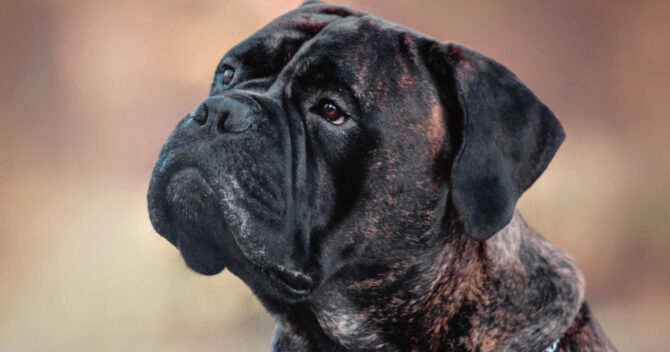
The Bullmastiff is a well-proportioned dog with an impressive appearance. His figure is muscular, strong and compact. The male reaches 64-69 cm in height at the withers and weighs from 50 to 59 kg, the female bullmastiff can be 61-66 cm and weigh from 41 to 50 kg.
The coat of representatives of this breed is smooth and consists of a dense undercoat and short, hard outer hair. The color is most often red, brindle or fawn. The Bullmastiff has a clearly defined stop and a large, wide skull that gives the impression of being square. It has strong jaws and strong teeth. Small, hanging, high-set, V-shaped ears lie close to the head. A characteristic feature of the bullmastiff's appearance is a black mask on its muzzle and a smooth forehead that wrinkles into folds when it is excited, curious or when something arouses its anxiety. The neck is heavily muscled and the broad chest extends deep between the straight, strong forelegs. The hind legs are well muscled and moderately angulated. The tail is set high, tapering towards the end, and is carried in a straight or bent position.
The bullmastiff has a muscular, strong and compact body.
Disposition
The bullmastiff pattern emphasizes the dog's strong defense instinct, thanks to which the people it cares for can always feel safe in its presence. The breed is characterized by a lively and active temperament and great endurance. The Bullmastiff is also known for its calm and reliable personality. He shows deep loyalty, tenderness and attachment to his family. Thanks to consistent and loving upbringing, he grows into a patient and sociable companion. Additionally, it is worth mentioning its good adaptability, which makes the four-legged friend fit perfectly both in the countryside and in the city.
Care
Because Bullmasiffs have short hair, their care is not complicated. Your four-legged friend sheds large amounts of hair only during the shedding season (spring and autumn), but the hair does not get stuck in the carpet or upholstery, so it is easy to clean up. Most often, it is enough to brush your pet's fur once a week (3-4 times a week during the shedding period), and in case of minor dirt, wipe the fur regularly with a damp cloth. This treatment is very important because dogs of this breed are prone to skin diseases, especially inflammation of the skin wrinkles on the head. Bathing with a gentle shampoo for short-haired breeds is recommended only when your four-legged friend is really dirty. Additionally, you should regularly check and, if necessary, clean the ears and eye area, and take care of the proper condition of your dog's teeth.
Diet and nutrition
At every stage of life, a bullmastiff requires a properly balanced diet that will guarantee optimal nutrition. Please remember to adjust the amount and composition of meals to the age, health condition and activity level of your pet. Food should be rich in:
protein (70%), which is a source of energy;
fats (unsaturated omega 3 and 6 fats), supporting, among others: immune system;
carbohydrates to aid digestion;
vitamins, micro and macro elements, especially those that have a positive effect on muscles, joints, bones, teeth and eyes.
The appropriate food for this breed will be complete food dedicated to large and giant breeds. When serving your pet meals prepared at home, it is worth supplementing them with appropriate nutrients, available in specially composed preparations (nutrients). Calcium and phosphorus, glucosamine, chondroitin, and vitamins A, E, D and K are particularly important.
Health and common health problems of bullmastiffs
Unfortunately, specific genetic diseases do not escape this breed. In particular, they include:
Double row of eyelashes. This is an inherited condition that results in an extra row of eyelashes growing from the dog's upper or lower eyelid. Eyelashes tilting towards the cornea irritate the outer membrane of the eye, causing tearing, bloodshot eyes, pain around the eyes, and, after some time, damage to the cornea. Surgery is most often recommended.
Ectropium. This congenital defect involves an unusual position of the eyelids, i.e. the edge of the eyelids turning in relation to the surface of the eye. As a result, the edge of the eyelid protrudes from the eyeball and the exposed cornea is constantly exposed to irritation and inflammation. In milder cases, eye moisturizing preparations are recommended, and in more serious cases, surgical solutions are used.
Entropion. This condition manifests itself in the folding of the eyelid (usually the lower one) towards the eyeball. The defect causes constant irritation of the outer mucous membrane of the eye, resulting in tearing and inflammation, and if left untreated, even loss of vision.
Stomach torsion. This is a very serious condition that threatens the animal's life. It means rotation of the stomach along its long axis by more than 180°. Its main symptoms include: release of gas, unsuccessful attempts to induce vomiting, shortness of breath, severe abdominal distension and a marked deterioration in the dog's well-being. The disease requires immediate intervention by a veterinarian and surgery.
Bullmastiff as a family companion
Thanks to the great personality traits and innate predispositions of the Bullmastiff, all its loved ones gain a loved, faithful and reliable companion. The calm and balanced nature of this dog makes it an ideal family dog. Bullmastiffs like children and are very patient with them. Nevertheless, due to their large size, it is worth being vigilant and keeping an eye on both your children and your pet while playing together. Additionally, they generally get along well with other pets. Caution is recommended during their first interactions and early socialization in this area.
The Bullmastiff has a calm and balanced character, which makes it an ideal family dog.
Bullmastiff training tips
As with any breed, early socialization and proper training of a Bullmastiff is crucial for the safety and proper development of the pet, as well as necessary for successful coexistence with the environment. It is very important to expose your furry friend (already at a puppy age) to as many unknown people, places and experiences as possible so that he can learn to respond properly to various situations.
In addition to the fact that the Bullmastiff has a calm, loving personality and is naturally good-natured, it should be remembered that it also has a strong defense instinct and great physical strength. For this reason, in order to maintain control over the dog, ensure good communication and safe functioning, its training should start with learning the basic commands: "sit", "stay", "heel" and "down" and learning to walk on a leash.
In addition to obedience training, important aspects of bullmastiff training include regular physical exercise and mental challenges and games. The Bullmastiff is intelligent and learns quickly, but can sometimes show strength of character. Therefore, the guardian must demonstrate consistency in upbringing based on positive reinforcement methods.
Please remember that the Bullmastiff also has a strong defense instinct and great physical strength.
Summary
The Bullmastiff is a great friend and protector, an intelligent, loyal and loving companion. However, it is important to provide him with a balance between intense physical activity, appropriate training and rest. Moreover, a harmonious life with a bullmastiff requires building a bond based on love, respect and positive emotions. All these elements, supported by regular visits to the vet and proper care (care, diet, preventive health care, ensuring optimal living conditions), are crucial for the health and well-being of the bullmastiff.
Most frequently asked questions
What is the history of the Bullmastiff breed?
The Bullmastiff is a relatively young breed that was created in the 19th century in England by crossing the Old English Bulldog with the Old English Mastiff. They were used as guard dogs to protect properties from poachers and intruders.
What are the characteristic features of the Bullmastiff's appearance?
The Bullmastiff is a well-proportioned, muscular dog with a shoulder height of 61 to 69 cm and a weight of 41 to 59 kg. It has short, smooth fur, a black mask on its muzzle, strong jaws and a wide chest.
What is the temperament of a Bullmastiff?
The Bullmastiff is known for its strong protective instinct, loyalty and attachment to its family. He is calm, patient and adapts well, making him an ideal family dog.
How does a Bullmastiff get along in the family?
The Bullmastiff is a loving and loyal companion that gets along well with children and other pets. Due to its great physical strength, caution should be exercised when playing with children.
Why choose a Bullmastiff as a companion?
The Bullmastiff is an intelligent, loyal and loving dog that is perfect as a guard and family companion. However, it requires proper training, care and a balanced diet to ensure its health and well-being.
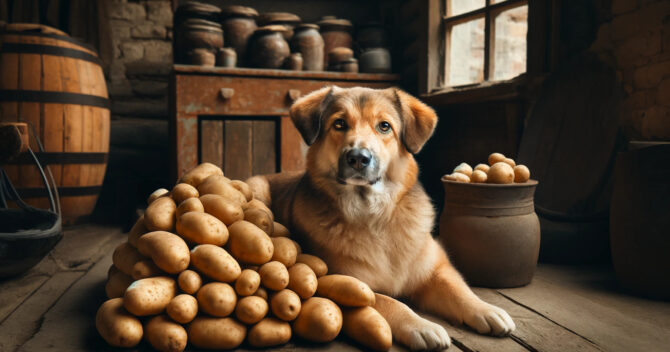
Potatoes are an excellent source of energy, protein, dietary fiber, vitamins and other nutrients. Moreover, contrary to popular opinion, they contain few calories. Mainly for these reasons, when properly prepared, they serve human health and figure. But are potatoes equally healthy for dogs? The nature of things lies primarily in understanding the nutritional needs of your four-legged friend and properly preparing a meal.
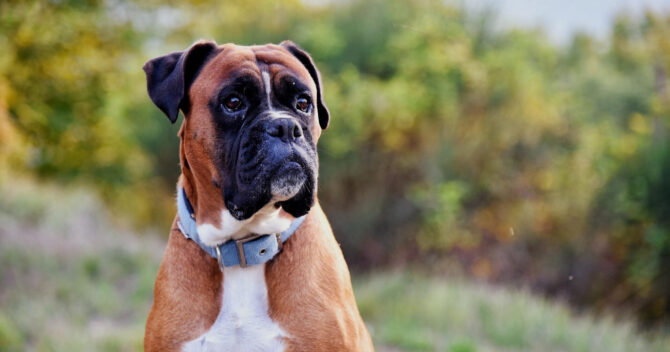
The boxer is known for his lively and cheerful disposition. But what really lies behind his captivating gaze? A sensitive and balanced family dog, an ambitious canine athlete or an incorruptible guardian? Without a doubt, this intelligent dog excels in many areas and is an extremely versatile four-legged companion.
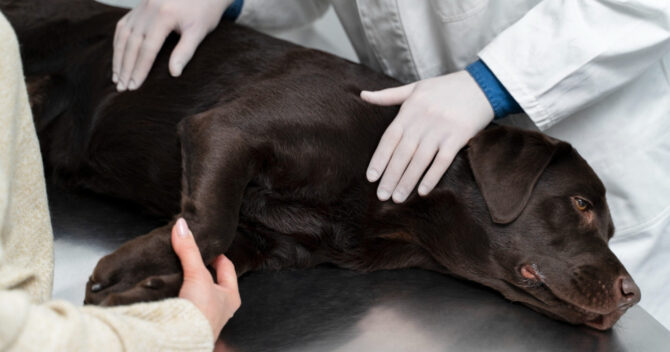
Many dog owners mistakenly perceive castration as an effective way to quickly solve behavioral problems in aggressive dogs or as a factor reducing the risk of cancer and other serious diseases. There are many myths surrounding this topic. So let's check what are the real effects of castration in dogs?