-15% on all HARNESSES | Delivery time up to 7 business days 🪡🚀
Dog castration – everything you need to know
Dog castration – everything you need to know
Date: May 15, 2024 (updated: November 25, 2024) Category: Blog, Dog health,
Many dog owners mistakenly perceive castration as an effective way to quickly solve behavioral problems in aggressive dogs or as a factor reducing the risk of cancer and other serious diseases. There are many myths surrounding this topic. So let's check what are the real effects of castration in dogs?
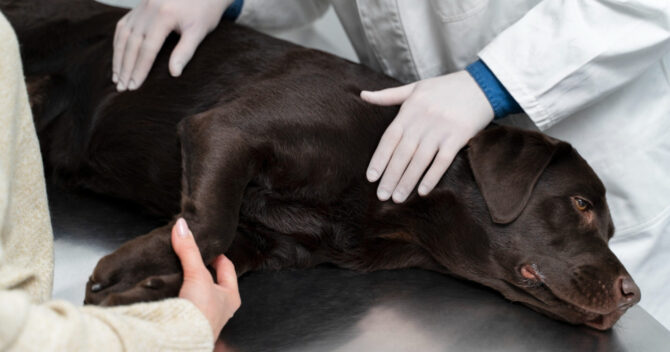
Castration of a dog is a surgical procedure that involves the removal of all organs of the reproductive system in both males and females: i.e. the testicles in dogs and the ovaries and uterus in females. As a result, the dog is deprived of reproductive abilities. This means that the female dog cannot become pregnant and the male loses the ability to fertilize. Castration is a final surgical intervention that cannot be reversed. This treatment has a significant impact on the dog's hormonal balance because it limits the production of sex hormones. Castration significantly reduces the sex drive in both sexes and also affects the disappearance of heat in female dogs.
How to prepare a dog for castration?
Castration is a surgical procedure under general anesthesia, so in order to minimize the risk of complications, all pre-operative recommendations of your veterinarian should be followed. Before the planned castration, we avoid any treatments that cause stress or reduce the immunity of our four-legged friend, i.e. the pet should not be vaccinated, dewormed, and in special cases also - bathed and haircut. Before coming to the clinic, you should take your dog for a quiet walk to relieve itself. It is required that the dog has an empty stomach before castration. He should not be given any food 12 hours before the surgery, and no water should be given immediately before the procedure.
How is the castration procedure performed?
The dog's castration procedure is performed under general anesthesia and usually takes about one hour. Before the procedure, the hair at the incision site is removed. During the operation, the surgeon incises the female dog's abdominal cavity, removes the reproductive organs (uterus and fallopian tubes) and sews the wound with surgical threads (usually non-absorbable). In males, the surgeon makes one incision along the abdomen above the scrotum to remove both testicles. Then, after releasing the spermatic cord, he sutures the wound. Dogs usually wake up from anesthesia after an hour and a half. They remain under veterinary supervision until the anesthesia wears off and they can stand on their feet on their own. However, they are still dazed, in pain and require special care.
Care after castration of a dog – what should you know?
After returning home, post-operative recovery begins, which usually lasts 10-14 days. Most dogs are on all fours, moving, eating and drinking the next day. The pet should have access to fresh water, but it is better to refrain from giving food for about 20 hours after the procedure. Your pet should be taken for a short, 15-minute walk up to three times a day. To limit excessive physical activity of the dog, which could result in serious complications, it is recommended to walk only on a leash.
In order to alleviate the pain and minimize the risk of bacterial infection, the convalescent is given antibiotics and painkillers for the first few days after castration, strictly according to the veterinarian's instructions. During this period, every effort should be made to ensure that your four-legged friend does not disturb the stitches and that the wound always remains clean and dry. Since the pet should not lick it, it is recommended to use a plastic neck collar or other post-operative accessory that has a protective function. If you notice any disturbing symptoms, e.g. vomiting, excess wound exudate, blood oozing from the wound or lack of appetite, you should immediately consult a veterinarian. The stitches are most often removed between the tenth and twelfth day after the procedure. Later, your four-legged friend can return to his previous activity.
Benefits of neutering your dog
Castration prevents accidental, unplanned pregnancies and uncontrolled reproduction of dogs. It has a significant impact on maintaining control over the reproduction process of your four-legged friends. In addition, castration is beneficial in two cases: aggressive behavior related to the endocrine system and medical indications. Castration for behavioral reasons only makes sense when the pet's behavior is actually related to the influence of sex hormones, e.g. with excessive sexual drive. However, it is important to remember that even if a dog exhibits this type of problematic behavior, neutering is one solution, not the only one. It is worth observing your four-legged companion carefully and consulting the problem with a veterinarian. Moreover, an important behavioral advantage is the fact that due to the lack of heat, castration increases mental stability and eliminates the problem of false pregnancy in female dogs.
Castration for medical reasons is recommended to reduce the risk of serious diseases, e.g. malignant tumors of the testicles, mammary glands, diseases of the perianal glands, undescended testicles, inflammation or torsion of the testicles, some prostate diseases, and urinary tract infections. However, we must remember that castration in dogs does not guarantee complete elimination of the risk of these diseases. There are many other factors that can affect a pet's health, including diet, hygiene, genetic predispositions and the presence of other diseases. Therefore, it is crucial to regularly monitor the health of your four-legged companion and strictly follow your veterinarian's recommendations.
Risks and negative effects of dog castration
Like any surgical procedure, castration also carries certain risks, which may include post-operative infections, hemorrhage (especially if the dog has problems with blood clotting), poor wound healing or allergic reactions to anesthetics. Potentially, the procedure may also contribute to changes in behavior (including: increased appetite, change in the level of activity, anxiety or excessive animation), health problems (including: obesity, urinary system diseases, skeletal development disorders, thyroid diseases and cardiovascular system) and difficulties in controlling urination or defecation. Therefore, you should consult a veterinarian before neutering your dog. This will allow you to obtain full information about the risks associated with the procedure and gain the opportunity to make the best decision for your pet's health and happiness.
When is the best time to neuter a dog?
The final decision on the date of castration should be made after consultation with a veterinarian. Your veterinarian will be the best judge of when the right time is to perform surgery for your particular dog. Neutering surgery can be performed at any age, but there are both advantages and disadvantages associated with surgery at different times in a dog's life. In the case of males, the date of the procedure generally depends on the age, breed and size of the pet. It is recommended to castrate only after the dog reaches sexual maturity, which is usually around 6-12 months of age. In female dogs it is easier to capture this moment. Research shows that castration is best performed just before the first heat or a month after its end.
Castration of a dog is a surgical procedure that results in reproductive incapacity. As a result, it prevents accidental pregnancies and, consequently, uncontrolled natural growth of dogs. Other advantages of castration include health and behavioral considerations. Although it is difficult to overestimate these advantages, it is always worth taking into account the risks associated with surgical intervention and its consequences. Therefore, before deciding to castrate your pet, you should consult a veterinarian and discuss the entire procedure, especially all the advantages and potential disadvantages of the procedure.
Most frequently asked questions
At what age should a dog be neutered?
The ideal age to neuter your dog depends on many factors, including the breed and size of the dog. Generally, it is recommended to perform the procedure between 6 and 12 months of age. However, for large breeds, some veterinarians may recommend waiting until the dog is fully mature.
Is castration of a dog painful?
Castration is performed under general anesthesia, so the procedure itself is painless for the dog. After the surgery, slight pain may occur, but it is alleviated by appropriate painkillers prescribed by the vet.
How long does recovery after castration take?
Recovery after castration usually takes 10 to 14 days. During these several days, it is important to observe the dog and limit its physical activity. In most cases, dogs recover quickly, but follow your vet's recommendations for post-operative care.
Does castration affect the dog's weight?
After neutering, dogs may tend to gain weight. This treatment affects metabolism and may reduce energy demand. It is therefore important to pay attention to the dog's diet and provide it with adequate exercise after castration.
How does a dog's behavior change after castration?
After neutering, a decrease in aggression is often observed. The treatment may also reduce the tendency to escape. Overall, neutering can contribute to a calmer and more balanced dog behavior.
Is neutering recommended for all dogs?
The decision to castrate should always be consulted with a veterinarian who will take into account the individual health and behavioral needs of the dog. For some dogs, neutering is recommended for health or behavioral reasons, but it is not the best choice for all.
The Yorkshire terrier is a cute dog that certainly cannot be considered a mascot. He is an action hero who loves movement and fun. Nothing escapes his attention. His shaggy hair, cheerful eyes, petite figure and strong ego create a contrast that few people can resist.
Nuts contain plenty of healthy fatty acids and are a rich source of minerals and vitamins, as well as electrolytes and other nutrients, including potassium, sodium, phosphorus and magnesium. Since they are a natural product, it can be assumed that nuts perfectly fit into our pet's diet. But is it really true? The answer largely depends on the type of nuts and the health of the dog. Particular caution should be exercised in the case of four-legged friends struggling with food allergies, food intolerances or being overweight.
The coexistence of humans and dogs should always be seen as a partnership. Without a doubt, for this relationship to be as harmonious as possible, both partners must follow the accepted rules. However, since each person in a human-dog team lives differently, has different needs and experiences, it is the guardian's responsibility to teach the four-legged friend to refrain from certain behaviors and respect boundaries. The best way to achieve this goal is to positively reinforce the desired actions and teach the dog the "no" command.