Rescue from stress
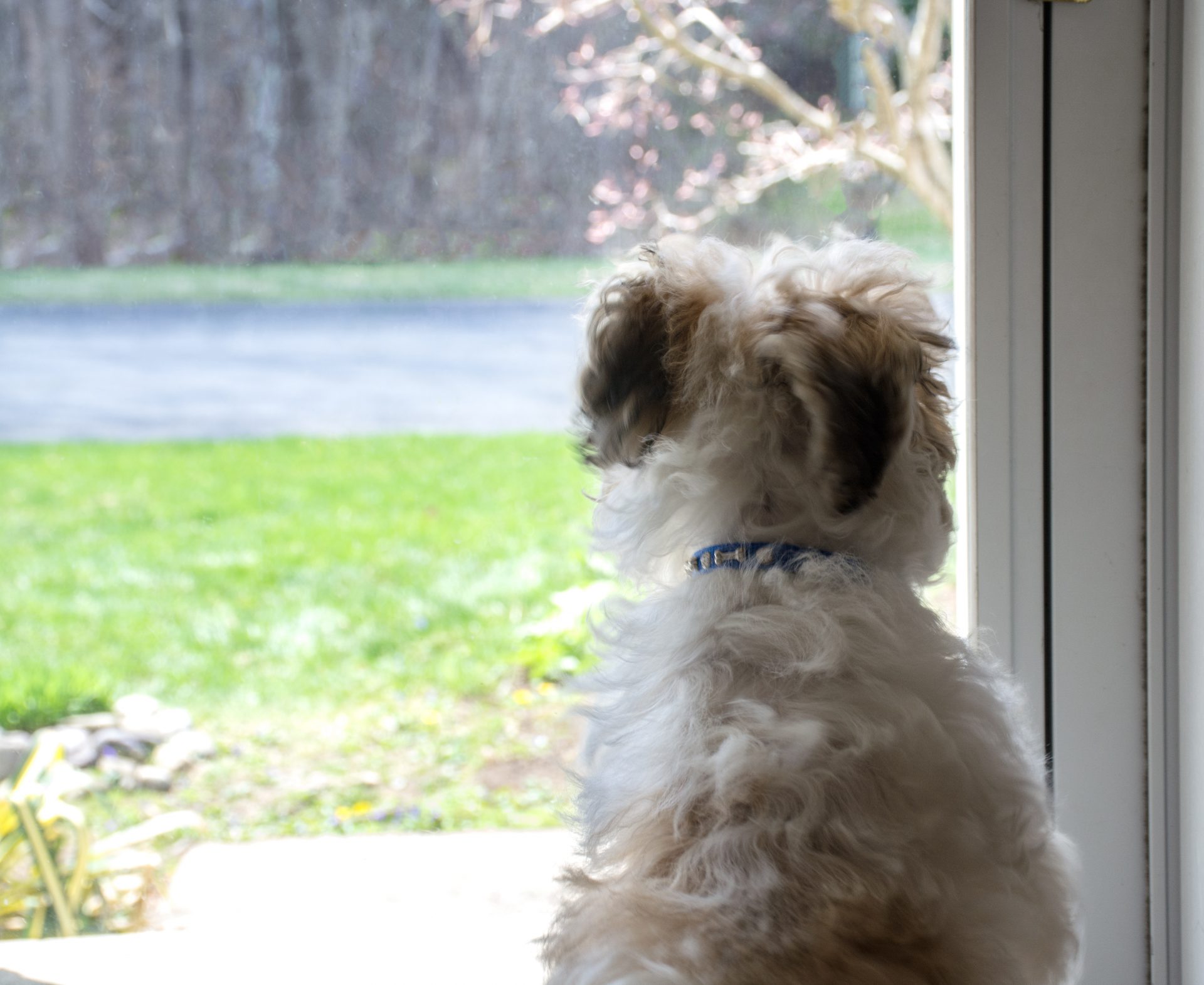
Getting your dog accustomed to being alone is an important part of raising a puppy or welcoming a new dog. It is an important element in the life of all household members. If your pet never learns to be calm when home alone, the consequences can be more than just embarrassing. but also dangerous to his health. You may develop separation anxiety that is difficult to treat. It is undoubtedly much easier to prevent drug conditions than to treat them after the fact.
How to teach a dog to stay at home - a challenge?
The degree of difficulty in training a dog to be left alone at home without problems depends largely on the personality of the student. Some, more sociable quadrupeds will take longer to learn, while for others, the effects of training can be seen very quickly. Regardless of character, temperament, age, you just need to choose the right form of training and encouragement so that solitude at home becomes relatively pleasant.
Beginnings are always difficult
Before you start learning, you need to prepare a few things: favorite treats and toys that will keep your pet occupied when he is alone at home. A new comfortable bedding or playpen may also be helpful. You don't have to leave your dog free access to the entire home. It's important to make sure she has her own place where she feels good. Therefore, in some cases, getting your dog used to the cage is a good option. Many quadrupeds who are properly trained feel safer in their cage.
Now you just need patience, willpower and optimism and you are ready to go to classes! It seems obvious that you cannot leave your dog alone for long hours. You should gradually get him used to spending time alone. To do this, you need to start by leaving your pet alone for a few minutes. Use the moment to take out the garbage or go to the nearest store.
Show your pet that it's okay
Building positive associations with loneliness is very helpful in training. Which means that you should create an association between your absence and something that gives your pet great pleasure. For many dogs, this something is simply related to food. Therefore, it is a good idea to save your favorite snack or food before going out. You can also keep special toys for the occasion and only take them out when you go out. They should be put back as soon as you return. This way, your dog learns that fun things happen when you are not at home.
Don't celebrate leaving home and celebrating returns. It's best if your dog learns that people coming in and going out are not a big event. We definitely love happy doggy greetings. However, excessively celebrating and extending these moments gives your pet a strong signal that the moment of your return is something extraordinary, more joyful, happier than the moments spent alone.
How To Teach Your Dog To Stay Home - Get Started Shortly But Frequently
Begin with a five-minute absence from home. Before going out, take your dog for a walk, preferably with play. The simplest solutions work: hide and seek, throwing a ball or Frisbee. Providing your dog with the optimal amount of exercise and mental challenges is important for many behavior problems. If your four-legged friend is given enough physical and mental exercise, he will be tired and will be much more likely to go to sleep when he is left alone at home. When you go out, make sure that your pet has his favorite treat and play accessories. In the following days, gradually increase the amount of time you leave the dog alone. After returning, be immune to the pout of a shaggy friend. Pay more attention to him, praise him, take him for a walk, initiate fun.
Remember, if your dog shows signs of separation anxiety or other problematic behavior, it's best to work with a certified dog trainer who can help with these issues.
Maybe you'll like it: