How to teach a dog to 'leg'? NLearning to summon a puppy
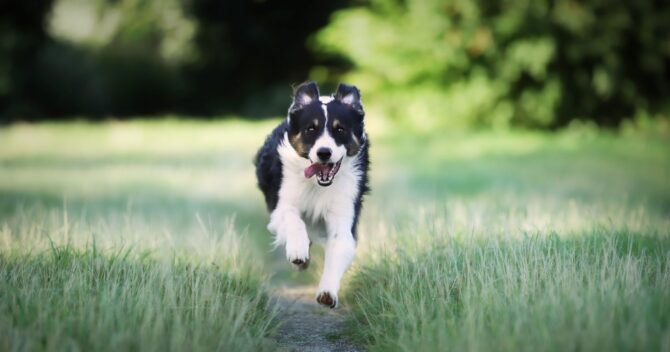
Teaching a young dog to command "to the foot" is relatively simple and can be mastered in a short time. This is because of the puppy's strong bond with his handler and the strong need to follow him. The guardian is perceived by the young dog as the most important person, giving him a sense of complete security. In practicing this skill, a huge role is played primarily by a friendly attitude, consistency and, of course, reward. Remember that rewarding with a treat does not have to be the only form of "thank you" for a well-done exercise. Other ways to motivate your pooch may be a moment of play, joint physical activity, or simply showing him tenderness.
How to teach a dog to "leg"? Learning an adult dog
The situation is different for older dogs, whose learning to follow a new command will require a little more commitment and patience. It is recommended to start training this command in calm conditions, when the dog will not be distracted by various signals from the surroundings. With time, when your pet can cope with learning better, you can change the place of training to one where it will be more absorbed by external stimuli.
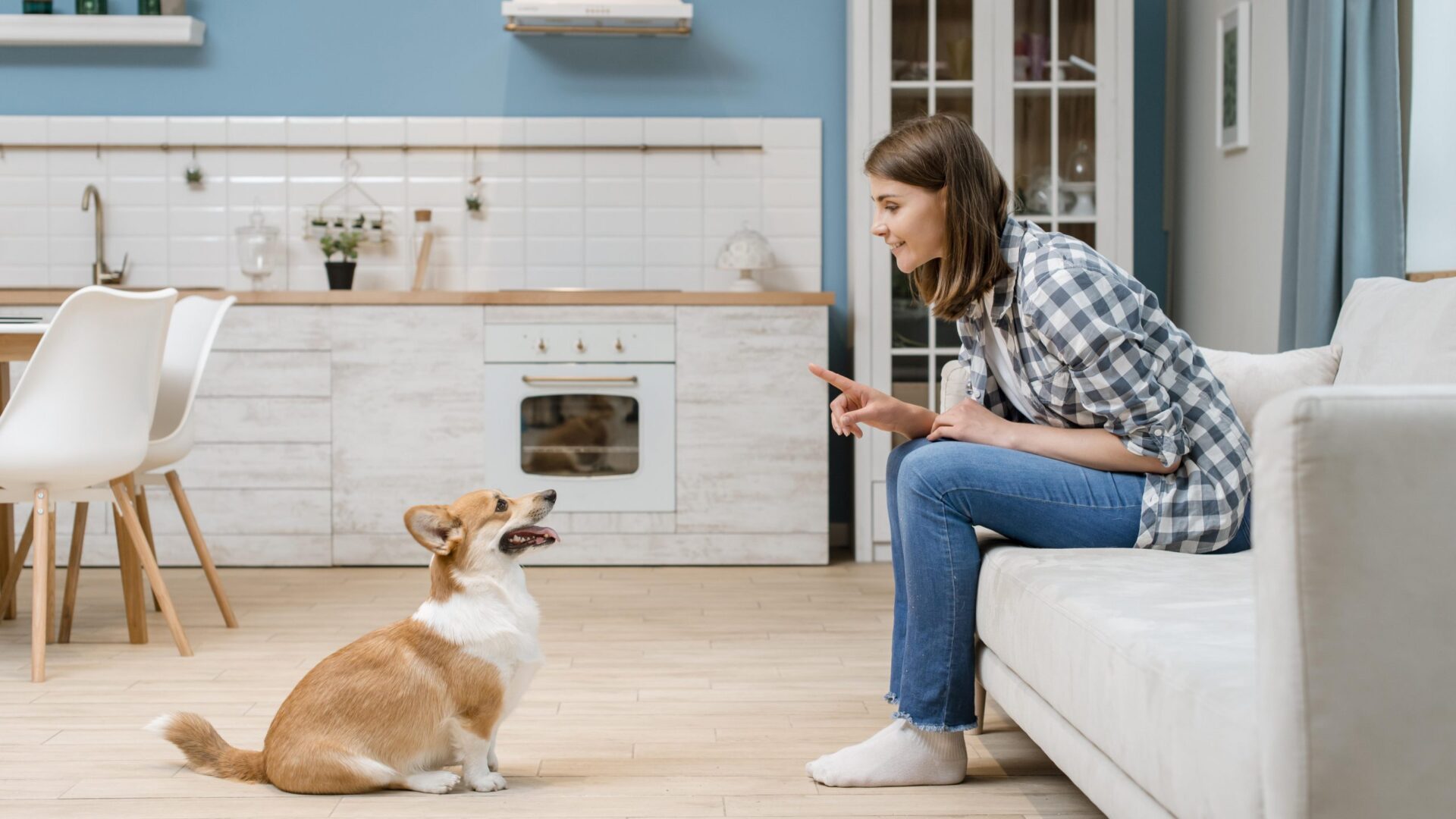
Both in the case of a young and an older dog, it is important to set one command variant, for example: "to the leg", "leg" or "to me". It does not matter which option you choose, but it is important not to change the chosen command during and after learning. Otherwise, the confused pet will not know what to expect from him.
Command to the leg - stage I
We start the training in a quiet place where the dog feels safe. At the beginning of learning, we will need a long leash. We attach it to the dog's harness or collar and let it go to its full length. Then give the command "to the foot" and at the same time gently pull the leash towards you, so that the pet returns to its place. We reward him for the right response.
Continuing the exercise, pay attention to how far the dog is running to the leg when giving the command. It is most desirable that he come as close as possible so that it can be touched. During the following trainings, we try to develop the habit of walking at a distance that will allow you to attach it to the leash.
Command to the leg without a leash - stage II
When your pet responds correctly to the "go to foot" command while on a leash, you can start the next stage of exercises. However, we should remember that the training at this stage should take place in a safe environment (at home, fenced area, parking lot). We leave the dog freely without the leash attached and walk away from him a few meters. After a short time, we say his name aloud (in order to attract the pet's attention), then give the command "go straight". When he correctly carries out the command, we reward him. Initially, we keep a short distance from the dog, then - as the obtained results progress - we gradually increase it. In the next stage of the training, we can slightly raise the scale of the difficulty. We do this exercise at home. We leave the dog alone and go to another room. Then we summon the pet by giving the command "go" and wait for his reaction. When he reacts correctly to the command, we reward him with a favorite delicacy.
Command to the leg away from home - stage III
After the pet has mastered the "go to the leg" command in calm conditions, we can proceed to the most difficult stage of training. We go for a walk in the park, where the dog will be distracted by many stimuli, e.g. children playing, dogs running. We carry out exercises on the same principles as in the previous stages. It is important to pronounce the command "stand" firmly as soon as the dog moves away a considerable distance. If he does the job correctly, we praise him for it and of course reward him.
Practicing under these conditions requires more repetition and consistency since the dog usually takes longer to learn a new skill under distracted attention conditions.
Recording the "to the leg" command - stage IV
We increase the degree of difficulty of training by modifying the exercises to consolidate the acquired skill in the pet. We summon the dog with the command he learns, walking away from him slowly, a short distance. Then, with a vigorous step, we begin to move away from it (we do not run). We call the dog several times to encourage him to follow us. After the pet has performed the exercise correctly, we remember about the reward.
It should be taken into account that training a new skill, in addition to learning the selected command, should be primarily a friendly form of spending time together, aimed at strengthening mutual relations. Remember that the nature of the dog undoubtedly affects the speed of acquiring new skills, so during training you should show understanding, patience and kindness. Occasionally, the pooch is reluctant to engage in exercise on a given day. Then we simply quit training and resume exercising on another occasion. We give him time to regenerate and improve the skills he has already mastered.
Maybe you'll like it: