How to teach a dog to give a voice command - and is it always possible?
Training teaches the dog to discipline, obey, helps in building trust and a sense of security, strengthens the bond between the guardian and his pet. It can also be a source of joy and satisfaction for both parties. However, in the world of dogs, as in humans, we meet different characters. There are calm and balanced dogs, but also those that are quickly aroused, nervous, fearful and impatient. There is a group of dogs that are very difficult to calm down, are unable to cope with emotions and tend to force various benefits with their behavior. In that case, we should abandon the thought of learning the command "give a floor". We also give up training if the dog has a tendency to persistent barking for no reason, suffers from separation anxiety or is overly demanding for food scraps and snacks. For other dogs, remember to teach them to bark only on command. We do not reward a dog for barking without being instructed to do so. Especially when we suspect that he is barking because he is expecting a reward for it.
Basic principles of training
- We organize short, pleasant, attractive training sessions (preferably five minutes, not more than ten minutes).
- We only exercise when both sides are in a good mood. Nervous atmosphere, fatigue and rush have a negative effect on the effectiveness of learning.
- We end each exercise with positive reinforcement (verbal praise, gesture, treat).
- In the first stage of learning, we train the dog in a quiet place, only at a later stage we add elements that distract his attention.
- Training must always be based on positive aspects and an understanding of the dog's nature.
Preparation for training
Command selection
Before starting the training, you should decide on the correct command for your pet. For example, when we say the word "bark", which is like the word "wait" - the dog may be confused and will not know what to expect from him. Therefore, you should take this into account and refrain from using commands that may be confusing for your dog. It is best to use the command "give a vote" or "vote". This command can be reinforced with a gesture, then the dog will remember it more easily.
Individual approach
We must remember that training a young dog is different from learning an adult pet. Despite the tendency to play, the puppy learns much faster and has no established behavior yet. We may encounter more difficulties when training an older dog, as an adult dog may already have established patterns of behavior in specific situations. So we will have to show more patience, consistency and an individual approach. Some quadrupeds will learn to respond to the “give a floor” command right away, others may take up to several weeks to respond.
How to teach a dog to give a voice?
We arouse the dog's interest in the treat and give the command immediately before barking
Since positive dog training is about rewarding the right behavior, your pet's favorite treat will come in handy at every stage of learning. Holding the delicacy in our hand, we try to interest our four-legged friend. The dog usually focuses attention very quickly on the favorite treat and then we give the command "give a vote". We need to say it firmly, clearly and loudly. When the mentee understands what we expect from him and reacts properly, we praise him and reward him with a treat. If we are precise and reward the dog at the right moment, the client will quickly recognize what he did that resulted in the award. This exercise should be repeated several times.
We must be prepared for the fact that at the beginning of the training, your pet may make various sounds. No matter how different the sound he makes from a typical bark, we reward him with a treat. However, over time, we only give a pet a reward if it barking in the right way.
First we give a command, then we show the treat
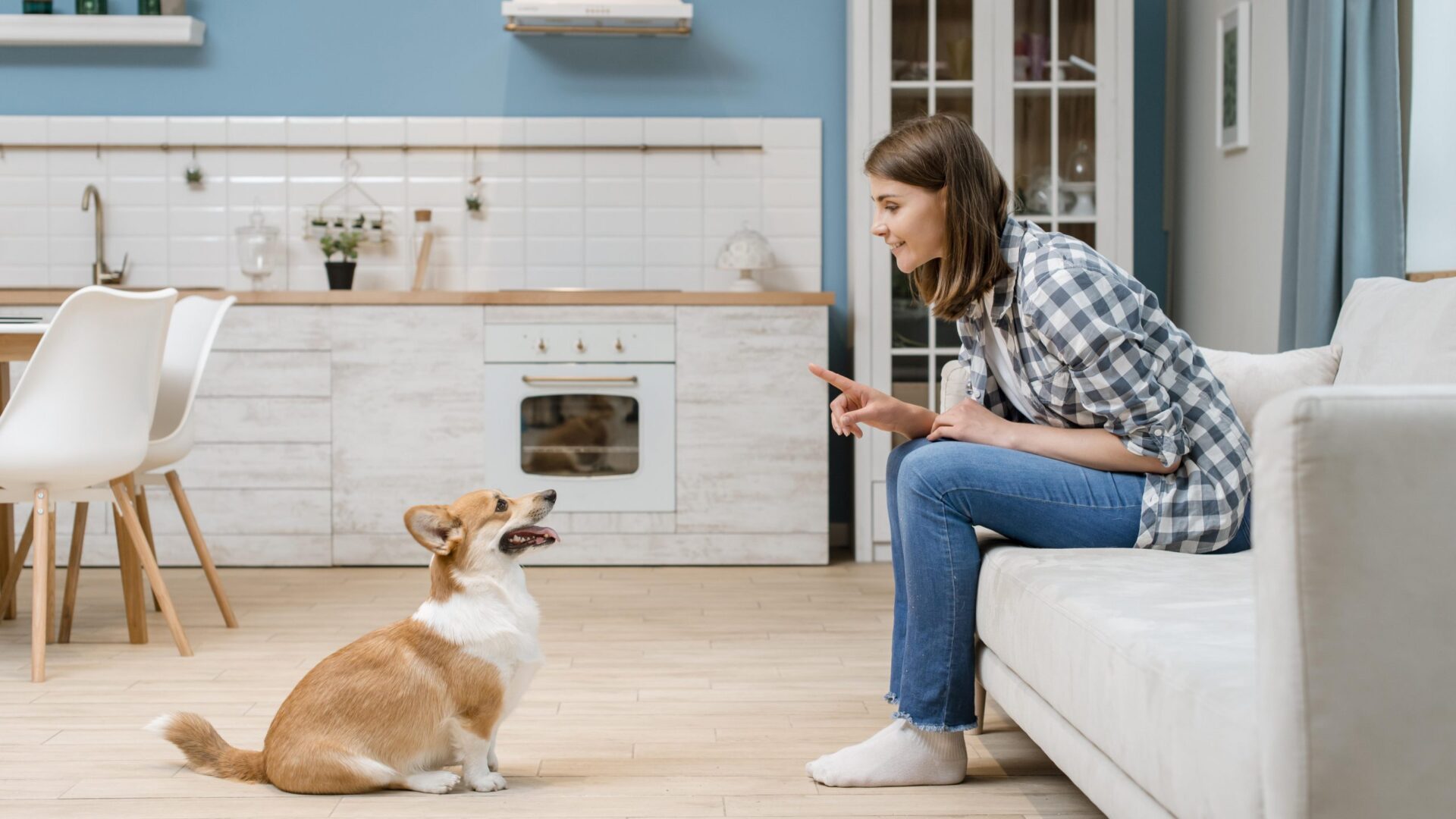
In this exercise, we pretend we are holding a delicacy hidden in our hand. Then we say the verbal command "give a floor". At the same time, use the straightened index finger of the right hand to guide the pet to the hand, allegedly hiding the treat. If the dog barkes, we reward and praise him. We repeat the exercise several times.
How to teach a dog to speak? Positive training
Regardless of the learning variant we choose, we always have to pay attention to the pet's emotions, among other things, to make sure that he enjoys the training. Remember that training should be attractive and evoke positive associations. Only then is the dog willing to engage and cooperate with the handler.
Maybe you'll like it: