-15% on all HARNESSES | Delivery time up to 7 business days 🪡🚀
Yorkshire terrier - an action hero who loves movement and fun
Yorkshire terrier - an action hero who loves movement and fun
Date: April 24, 2024 (Updated: November 25, 2024) Category: Blog, Dog breeds,
The Yorkshire terrier is a cute dog that certainly cannot be considered a mascot. He is an action hero who loves movement and fun. Nothing escapes his attention. His shaggy hair, cheerful eyes, petite figure and strong ego create a contrast that few people can resist.
At the beginning of the industrialization process that took place in Great Britain in the late 18th century, many Scottish workers moved from the countryside to the larger towns of Yorkshire in search of work and better prospects. They then brought with them their native dogs of breeds that no longer exist today, such as Skye Terriers and Clydesdales. These dogs began to be bred with several local breeds, including the English Terrier and the Maltese. The task of small terriers bred since the beginning of the 19th century was to protect homes against rats, martens and mice. Later, they were also used for hunting rabbits and foxes.
Over time, the useful little helper became much more. Poor farmers and workers sold many Yorkshire terriers, profiting from breeding aimed at constantly reducing their size and weight to make the dog more interesting to the English upper classes. As the breed became more and more popular, breeders stopped working on expanding the dogs' hunting skills in favor of beauty (especially the coat) and charming disposition.
The very successful show dog Huddersfield Ben is considered to be the ancestor of the Yorkshire terrier breed. The current name of the breed, which was created in 1870, was entered into the stud book in 1874 and officially recognized in 1886 by the English Kennel Club. Finally, the FCI recognized the Yorkshire Terrier breed at the end of 1954.
Appearance
The current Yorkshire Terrier dog standard was published on November 10.11.2011, 3. According to the FCI classification, the breed belongs to group 2 - terriers, section 20 - miniature companion terriers. The Yorkshire terrier is an exceptionally charming representative of one of the smallest breeds in the world. An adult Yorkie reaches a height of about 3,2 centimeters at the withers and a maximum weight of XNUMX kg. The dimensions of females and males differ little, if at all.
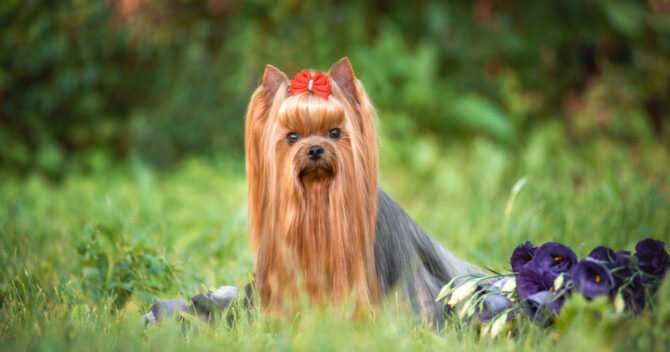
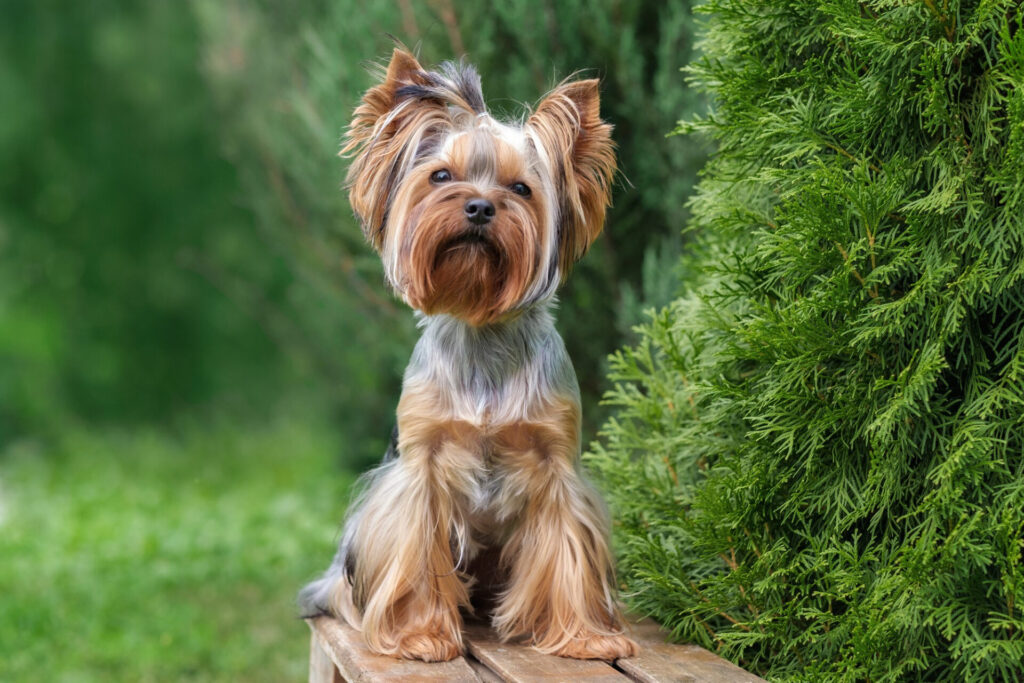
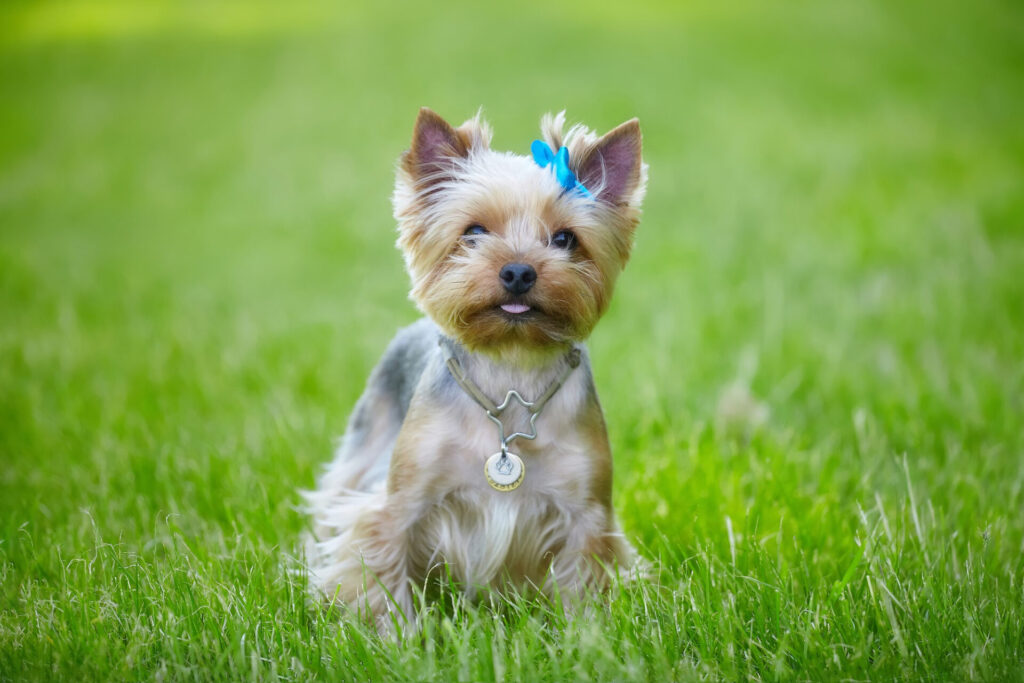
Yorkshire terriers have a proportional body structure and an upright posture, which makes them look proud and dignified. The small round head is decorated with dark, shiny eyes with an intelligent expression, a not too long muzzle with a black nose and small, erect V-shaped ears. The compact, straight body ends with a domed or natural, abundantly covered tail, carried slightly higher above the back line. The straight limbs are covered with tawny-golden fur, gradually becoming lighter from the roots to the tips of the hair.
The real pride of Yorkshire terriers is their silky, shiny coat, which is of medium length (quite straight) on the body and long on the head, in a vivid tawny-golden and tan color. The hair on the muzzle should be very long and in a steel-blue shade, and on the chest it should be intensely tawny.
Yorkshire Terrier
Nature and character
The Yorkshire terrier is a dog with a strong character. He faces his surroundings bravely and bravely. He is always ready to defend himself and his family. Apparently unaware of his size, he boldly approaches challenges, unfortunately including much larger pets.
The Yorkshire Terrier has a versatile nature. On the one hand, he likes to be petted and cuddled, but on the other hand, he needs adventures and exciting games. It may be surprising, but this small dog has an active and extremely lively temperament. He likes to have fun outdoors and needs a lot of activity to use his need for exercise and intelligence. Three walks a day are an absolute minimum for a Yorkshire terrier.
Due to its size, you can easily take it with you anywhere and explore new dog walking areas. However, you should always keep an eye on him, because the little rascal, due to his strong hunting instinct, likes to run away into the bushes. He also loves digging. It is advisable to give him the opportunity to make a hole outside - otherwise he will create it himself anywhere, and the result of this work may not be very interesting. Other activities that may interest Yorkshire terriers are searching and hunting. Due to their playful nature, dogs of this breed can quickly become excited about agility courses or games of fetch. If you provide your pet with a variety of activities, you will have a balanced and sociable dog by your side. Its handy, small size makes it suitable for keeping in the apartment - as long as it goes outside often so that its energy can flow freely.
Yorkshire terrier and family
Few dogs like to be left alone at home, and the active Yorkie is no exception. You should not leave your pet alone for more than five hours. Of course, you must first teach him to be alone. It is best to start training in small steps already during puppyhood. After returning home, you should immediately devote your time to your little friend, in the form of playing, petting and walking.
The Yorkshire terrier loves its owner, quickly builds a strong bond with him, and is able to treat his loved ones in an equally emotional, warm, friendly and funny way. Sometimes, however, it may show a dominant face and violently demand that its wishes be fulfilled, most often by barking. These temperament elements and a surprisingly loud voice (a feature typical of terriers) are an indication why a fearless pet should be socialized early. These intelligent little dogs learn quickly, but given their strong egos, they are easier to train
Yorkshire terrier in its puppyhood than to break bad habits later in life.
Yorkie usually tolerates children very well, but you should first teach your child how to treat a four-legged friend or supervise their play together. Sometimes it may happen that a child unknowingly hurts the dog, and then the Yorkie may react instinctively and scratch or bite the toddler. Most often, however, the Yorkshire Terrier is ready to play and go crazy with children.
Education and training
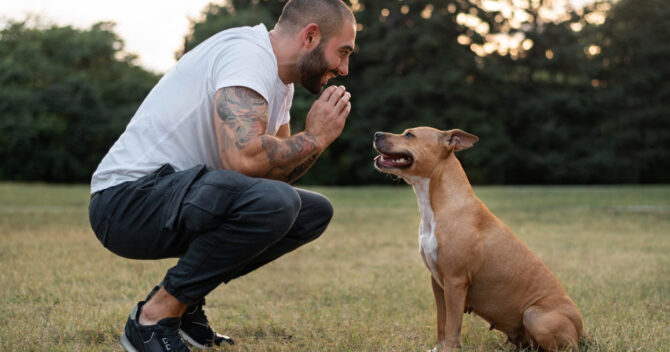
This dainty posture, cheeky look, and cheerful disposition make you want to spoil this little rascal. You definitely shouldn't do this. Proper training based on positive reinforcement is a must for the Yorkshire Terrier. And it's best to start them as early as possible. If the pet is not properly trained, it may happen that the dominant character traits and innate self-confidence will become problematic and significantly disturb the relationship between the dog, the owner and the environment. Therefore, the guardian is responsible for teaching the pet how to behave properly in everyday life, towards itself, other people (children), and animals. If a Yorkshire terrier is accustomed from an early age to the presence of another animal in the house (including a cat), it can easily control its hunting instincts.
Another issue is the fact that due to its alertness, combined with self-confidence, protective instinct and perhaps a desire to show off, the Yorkshire Terrier tends to loudly "comment" on intriguing accents of the environment. If the owner does not control this behavior from the beginning, the pet will certainly grow into a troublesome barker who constantly causes trouble. Therefore, you should devote time to patient, consistent and friendly training of your four-legged friend, aimed at calming down and limiting excessive barking.
Yorkshire Terrier
Regular visits to the vet and preventive health care
Long hair requires special care. In addition to daily brushing and combing, the ritual should also include caring for the skin around the eyes, the condition of the teeth, regular cleaning of the ears and trimming the claws. Additionally, it is recommended to bathe the Yorkshire Terrier with a special shampoo adapted to the specific hair type, approximately once a week.
It is important not to ignore brown discoloration of the fur under the eyes, which may be a symptom of health problems in your pet. Discoloration may have various causes, so if streaks appear under the dog's eyes, consult a veterinarian and follow his recommendations. Most often, dark spots are caused by yeasts and bacteria that, thanks to tears, gain a favorable environment to develop on the skin. Therefore, it is worth doing everything possible to minimize tearing on a daily basis. First of all, long hair on the head can be tied or clipped to prevent the hair from falling into the eyes.
You should also make sure that the Yorkshire terrier's hair is not too long and does not make it difficult for the dog to move. Because your little pet doesn't change its fur, it needs to be trimmed or clipped regularly, usually about every month. Typically, comprehensive care and haircut of a Yorkie takes an experienced groomer about 2 hours. You should reserve almost 3 hours for your own haircut.
Yorkshire terrier, diet and nutrition
The Yorkshire terrier has a very sensitive digestive system and reacts particularly badly to changes in food, so you should be careful with what you eat. If we choose the right food for him, it is definitely worth sticking to it. The food should be of high quality, preferably dedicated to this breed or intended for small dogs. This type of food has granules of the right size and a balanced composition, containing all the necessary nutrients. You can diversify your diet with self-prepared meals made from fresh ingredients. However, remember that each serving contains all the necessary nutrients. To avoid excess weight in your dog, when selecting the amount of food (both dry and wet food), you should take into account several factors, in particular: age, gender, health condition, level of activity and weight of the Yorkshire Terrier. Generally, the requirement of active Yorkies reaches 200 calories a day.
Health
Yorkshire terriers suffer from breed-specific diseases, in particular:
Patella luxation (the kneecap often pops out of the frame)
eye inflammation (most often due to long, hanging fur)
skin allergies
collapse of the trachea
Yorkies are also susceptible to bronchitis, dental problems (including caries, gingivitis), cardiovascular diseases, and the above-mentioned digestive problems. A key element in the prevention of these diseases, apart from awareness of the risks, is comprehensive health care, which takes into account meeting the pet's needs on a daily basis, combined with regular check-ups at the vet and the implementation of the recommended vaccination schedule.
Yorkshire Terrier
A new home for a Yorkshire terrier
Before choosing a four-legged friend, it is best to look for proven breeders whose aim is to minimize the risk of genetic diseases and congenital defects and to breed the healthiest puppies possible. It is certainly worth visiting a shelter, because unfortunately it happens that Yorkshire terriers also lose their homes. Before purchasing or adopting a Yorkie, interested people should always take a closer look at the breed's portrait to be sure that it is the right decision. To make the choice easier, we have included the most important features of the Yorkshire Terrier in a nutshell:
A real terrier with a lively temperament - a seeker of adventure and fun
He needs a lot of activity every day
It builds strong bonds with household members and does not like loneliness
Brave, alert, confident
Intelligent, learns quickly
He likes to bark
It needs proper care and diet
It requires early socialization, consistent and loving upbringing, taking into account the hunting instinct
The average life expectancy of representatives of this breed is 13-16 years
Most frequently asked questions
How long do Yorkshire Terrier dogs usually live? Yorkshire Terriers usually live between 13 and 16 years. Their lifespan can vary depending on factors such as genetics, level of care, health and diet.
Does the Yorkshire Terrier get along well with other animals? Yorkshire Terriers can get along well with other animals if properly socialized from a young age. Often, however, due to their small size and temperament, they may feel threatened by larger animals.
How often should a Yorkshire Terrier be brushed? Yorkshire Terriers can get along well with other animals if properly socialized from a young age. Often, however, due to their small size and temperament, they may feel threatened by larger animals.
What are the most common diseases in Yorkshire Terriers? Yorkshire Terriers are prone to certain health conditions, including dental problems, back problems and genetic diseases such as patella luxation. Problems with the pancreas are also common, and their small size may contribute to orthopedic problems.
Is a Yorkshire Terrier suitable as a first dog? A Yorkshire Terrier can be an excellent choice for a first dog, as long as the potential owner is aware of the breed's needs, including the need for regular grooming and socialization. They also require constant attention and can sometimes be stubborn in training.
What activities are recommended for Yorkshire Terriers? Yorkshire Terriers enjoy a variety of activities, including short walks, playing with toys, and agility training, which keep their mind and body fit. These are energetic dogs that like to be on the move, but their small size means they don't need a lot of space to exercise.
Nuts contain plenty of healthy fatty acids and are a rich source of minerals and vitamins, as well as electrolytes and other nutrients, including potassium, sodium, phosphorus and magnesium. Since they are a natural product, it can be assumed that nuts perfectly fit into our pet's diet. But is it really true? The answer largely depends on the type of nuts and the health of the dog. Particular caution should be exercised in the case of four-legged friends struggling with food allergies, food intolerances or being overweight.
The coexistence of humans and dogs should always be seen as a partnership. Without a doubt, for this relationship to be as harmonious as possible, both partners must follow the accepted rules. However, since each person in a human-dog team lives differently, has different needs and experiences, it is the guardian's responsibility to teach the four-legged friend to refrain from certain behaviors and respect boundaries. The best way to achieve this goal is to positively reinforce the desired actions and teach the dog the "no" command.
Nausea and vomiting are common health problems in dogs. Each case of a four-legged friend vomiting is different and should be approached individually. The range of causes of this disorder is wide. The most common ones include: food intolerance, foreign body ingestion, indigestion or other gastrointestinal disorders. In most cases, the symptoms are short-lived and are nothing to worry about. However, there are a number of serious diseases that cause symptoms such as vomiting. Frequent and persistent vomiting may indicate a condition that requires immediate treatment. For this reason, if your dog's vomiting continues, accompanying symptoms appear or your pet's condition worsens, an immediate visit to the vet is necessary.