-15% on all HARNESSES | Delivery time up to 7 business days 🪡🚀
Pomeranian (Pomeranian) – small in size but big in heart
Pomeranian (Pomeranian) – small in size but big in heart
Date: September 26, 2025 (Updated: October 8, 2025) Category: Blog, Dog breeds,
Pomeranian is a cheerful, friendly dog with a great temperament. Despite his small size, he has a big heart and is strongly attached to his family. This is an extremely distinctive breed that attracts not only with its appearance, but also with its expressive disposition.
The Pomeranian Spitz is lively, inquisitive, and always playful. He has a cheerful, gentle disposition and a lively temperament. He likes company and gets attached to the caregiver very quickly. He is characterized by sensitivity, devotion and kindness towards all household members, although it sometimes happens that he chooses the favorite among them. He does not tolerate solitude well and would most willingly accompany the owner constantly. She loves playing together and all kinds of activities. On the other hand, he is distrustful and distant towards strangers. He is very vigilant, sensitive to extraneous sounds and any suspicious noise will be signaled by barking. Pomeranian is generally friendly towards other animals. He likes to stay in a group of dogs of similar stature. It easily adapts to any conditions, it feels good both in a house with a garden and in a small apartment.
Pomeranian - skills and upbringing
Pomeranian is intelligent, quick-witted, perceptive and inquisitive. Therefore, it has a set of features that facilitate learning and upbringing. Since he is usually willing to cooperate, he learns quite quickly. The guardian, however, must show great patience and consistency. Pomeranian can be stubborn and willingly takes advantage of the owner's weakness. However, the use of upbringing based on positive reinforcements and avoiding punishments brings the desired effect and can make the pomeranian an ideal family companion.
Suggested sizes and widths of accessories for this breed of dog:
Here are the suggested sizes for adult dogs of this breed. They were selected on the basis of many years of experience in sewing accessories and the most common choices of other dog owners of this breed. Remember, only measuring will give you 100% certainty - every dog is different.
The Pomeranian Spitz is usually in good health. However, like other miniatures, it is prone to hip and elbow dysplasia and patellar dislocation. The guardian should not let him jump off tall furniture. Proper movement is also helpful, supporting the development of the muscles of the hind legs. The other diseases include:
problems with the trachea (collapse),
hypoglycemia and hypothyroidism,
bladder stones (urolithiasis),
eye diseases - cataracts, cataracts, eyelid curl.
It is also worth mentioning the rare, but extremely troublesome disease of Alopecia X. This disease, which causes hair loss on the body, affects mainly such breeds as: pomeranian, malamute, Czy miniature poodle. During illness, the dog must be protected against UV radiation.
Nutrition
Dogs of this breed have a fairly fast metabolism, they lose energy in a short time and need to eat often but little. Due to the condition of the coat, the food for a dog of this breed should be of good quality, with the right amount of nutrients. The pomeranian menu can include dry and wet food, as well as self-prepared cooked or raw meals. However, it should be remembered that cooked meals must be supplemented with calcium and vitamin preparations. Fatty acid supplementation is also important, i.e. adding omega-3 oil to meals.
Pomeranian - care
The abundant undercoat of this breed tends to clump together, which requires regular, practically daily brushing. Careful brushing of the coat keeps its healthy and radiant appearance. Particularly important is the care of lush hair, which is the showpiece of every Pomeranian. During baths, which are recommended not more than once a month, the shampoo should be evenly spread, which is not easy due to the abundant undercoat. It is also important to rinse your dog thoroughly after washing and to dry it with a dryer. Otherwise, excess moisture left on your dog's skin can cause chafing. After each bath, your pet's hair should be gently combed. Pomeranians should not be trimmed very shortly, because once shaved hair, it is highly probable that it will never regain its beautiful, fluffy appearance. Haircutting destroys both the hair structure and its protective properties. Dogs of this breed tend to form stains around the eyes. In such a case, daily hygiene of these areas is necessary, which consists in washing the eyelids with a special liquid.
We must remember that due to its lush fur, pomeranian does not tolerate high temperatures well. On hot days, it is absolutely necessary to provide him with a cool place to rest!
Most frequently asked questions
Where does the Pomeranian breed come from?
The Pomeranian originated in Pomerania, but the modern version originated primarily in England. It gained popularity thanks to Queen Victoria.
What does a Pomeranian look like?
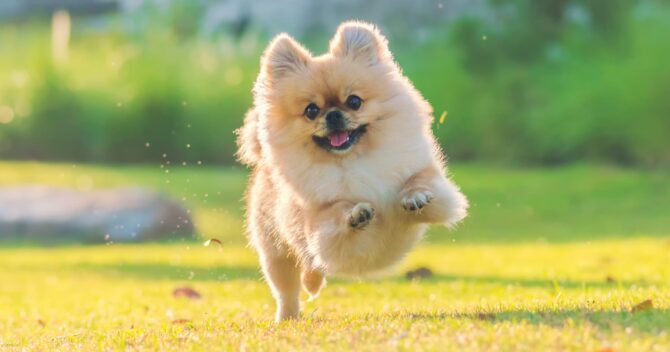
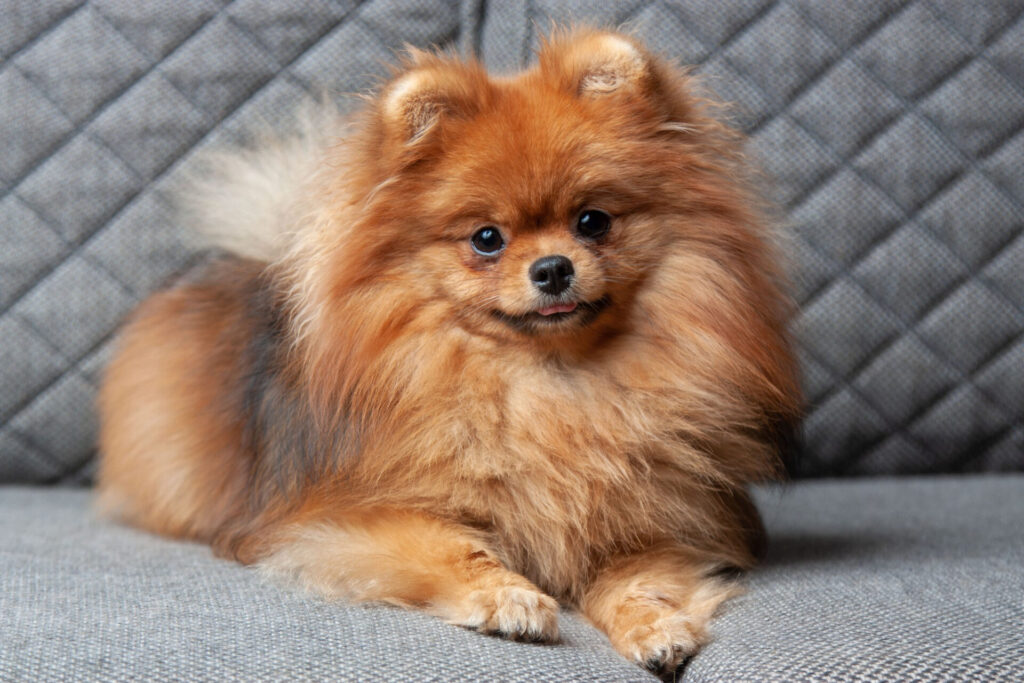
The Pomeranian is a small dog with a thick coat, a small muzzle, and expressive eyes. Its tail is carried proudly over its back.
Is the Pomeranian suitable for apartments?
Yes, the Pomeranian thrives in apartments. All you need to do is provide him with playtime and short walks daily.
Does a Pomeranian get along well with children?
Generally, yes, but children should learn to be gentle. Pomeranians can be fragile and don't always tolerate overly intense play.
How long does a Pomeranian live?
The average lifespan of a Pomeranian is 12 to 16 years. With good care, they can live even longer.
The Polish Lowland Sheepdog is attractive not only for its appearance but also for its character. Energetic, intelligent, and strongly bonded to its family, it has a personality that's hard to confuse with any other. It loves exercise and working with people. It thrives in both city and country settings, provided it doesn't get bored within its four walls.
The Maltese is a lovely dog, a white ball with an exceptionally nice disposition. With remarkable ease, in just a few seconds, it can melt the human heart. He is a companion dog, an excellent family friend, although his long and interesting pedigree indicates various predestinations.
Pyometra is a serious threat to the life of any female dog. Sounds dangerous? And rightly so. However, it's not a death sentence, as long as we react quickly and sensibly. This inflammation can strike suddenly, often right after heat, when everything seems to be returning to normal. Yet, something begins to go wrong. The dog becomes lethargic, refuses to eat, drinks more frequently… and that should set off a red flag.