What is demodicosis in a dog?
Dog demodicosis is caused by three morphologically different mite variants: Demodex canis (the most common form), D cornei and D injai. Their life cycle consists of four stages:
- eggs, resembling a lemon stone,
- larvae that have three pairs of legs,
- pupae (with eight pairs of legs),
- adult individual with 4 pairs of legs, head and body.
Parasites are transmitted from mother to young tetrapods during the first two to three days of life. They then live in the hair follicles throughout the animal's lifetime and do not contribute to disease until they are in equilibrium. Demodex is part of a dog's natural skin flora, and its immune system can usually maintain an adequate number of mites. However, demodicosis affects individuals who have weakened immunity due to illness, age or taking certain medications. This disease is also more common in quadrupeds with an insufficiently developed immune system, i.e. puppies under 18 months of age.
Skin lesions in the initial stage affect the area around the eyes, nose and muzzle. The disease most often takes a local or generalized form. Generalized demodicosis is much more common in purebred dogs. Research conducted in recent years in the United States indicates the breeds of American Staffordshire Terrier, Chinese Shar-Pei, Staffordshire Bull Terrier, Cairn Terrier, doberman, German Shepherd, Beagle, Sheltie as breeds with a genetic predisposition to demodicosis.
Local demodicosis, or focal point
This type of demodicosis usually occurs in young dogs just before they reach sexual maturity. Among the characteristic symptoms for this form are:
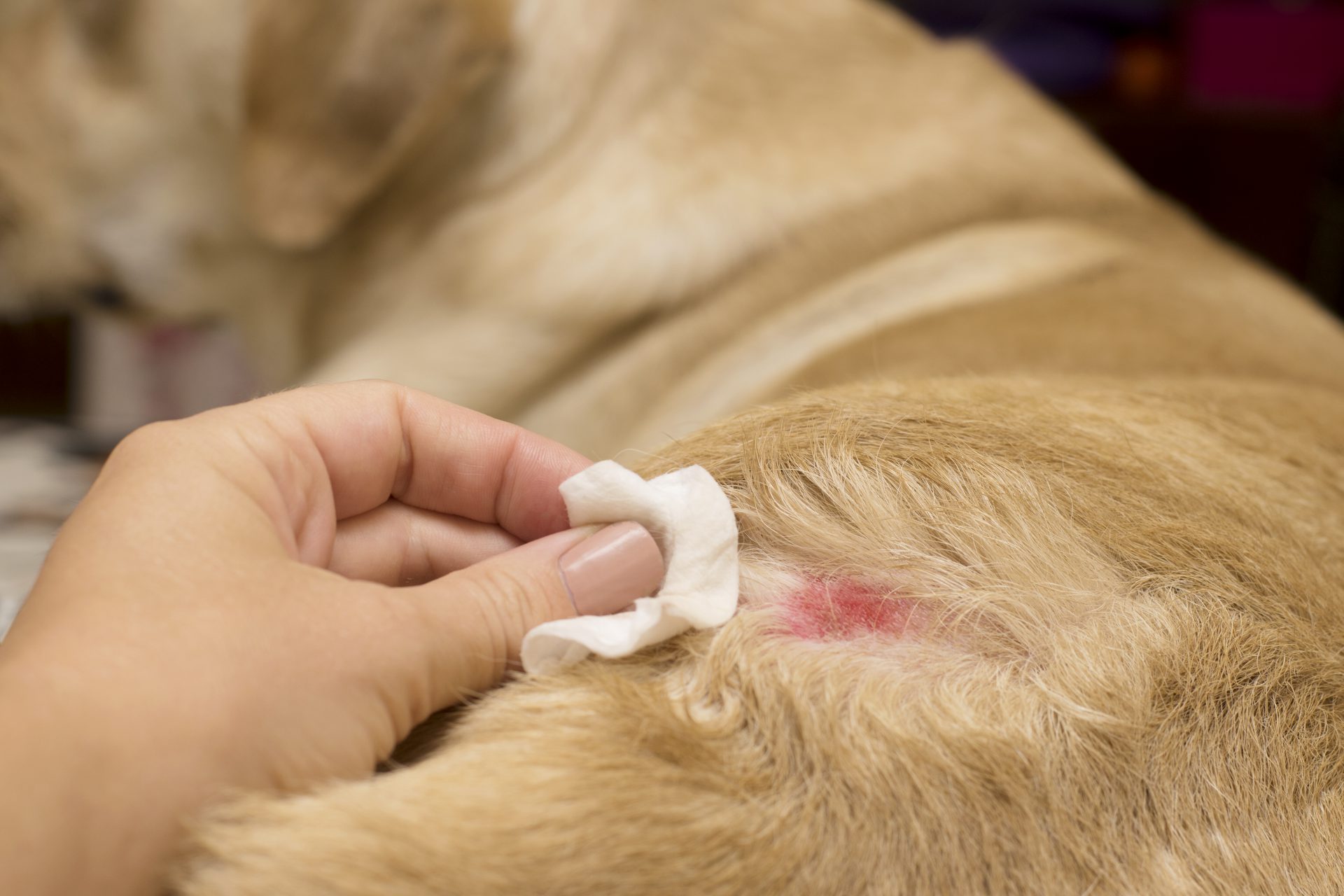
- skin lesions, taking the form of well-defined, plaque alopecia
- erythema, hyperpigmentation
- excessive exfoliation of the epidermis
- comedones, formed as a result of obstruction of the hair follicles by sebum and epidermal cells
- itching
- eruptions in the form of lumps, pustules and crusts
- seborrhea
- The changes mainly affect the eyelids, eye area, neck, less often the limbs and torso.
Generalized demodicosis
This form occurs most often in young dogs, several months old, and is associated with changes in the immune system, endocrine glands and changes in the structure of the puppy's skin. In adult dogs over 4 years of age, demodicosis is generally associated with a severe decline in immunity, which may be due to chronic illness or the use of certain medications.
The characteristic fears of the disease are:
- enlargement of eruptions, joining together skin lesions and creating the so-called plaque
- the occurrence of eczema and inflammation around the periphery of the lesions
- fistulas with exudate flowing out
- hyperpigmentation, discoloration taking a gray or blue-gray shade
- erythema, intense exfoliation of the epidermis
- pustules, scabs that cover the entire plaque.
- The changes gradually spread and, as a consequence, can affect the entire body. If they take the form of purulent, hemorrhagic foci of a chronic form, lymphadenopathy, weight loss, and even sepsis may result.
Dog demodicosis - diagnosis and diagnosis
If, based on the observation, clinical symptoms and age of the dog, we suspect demodicosis, we should go to a veterinary clinic. to confirm the disease. In order to diagnose the disease, the vet usually performs a deep skin scrap (from several places) and also orders an examination of the collected hair (trichogram). The absence of Demodex in the sample does not mean that there is no invasion, so the test is usually repeated after a week. In case of doubt or in the case of scarred skin with ulcers, from which it is difficult to scrape, the diagnostics is extended to the histopathological examination of the skin section or skin biopsy. The diagnostics is complemented by a detailed environmental interview (appearance of the first changes, seasonal regression, intensification) and a clinical examination of the dog.
Demodicosis in a dog - how to treat it?
Treatment of demodicosis is difficult and complex, especially in the generalized form. It is very important to evaluate:
- the age of the sick dog
- the extent and location of skin lesions
- the occurrence of secondary infections
In the case of the local form of demodicosis, there is generally no need to implement treatment, as most cases resolve spontaneously within a few weeks (5-8 weeks). In young dogs, mild skin lesions located over a small area (slight reddening of the skin and thinning of the hair) may resolve spontaneously as the animal grows up. However, if no treatment is implemented, these cases should be carefully monitored. It is worth performing a control scrap (every 3-4 weeks), so that when the symptoms worsen
administer appropriate therapy.
In the case of more severe skin lesions of the local form, we can use baths with benzoyl peroxide shampoo. This treatment is aimed at "cleaning the hair follicles", reducing the bacterial population and getting rid of bacterial superinfections. When using this type of shampoo, however, you should check how your pet's skin reacts to this preparation. In the case of sensitive skin, side effects may occur.
Extensive skin lesions, pyoderma, boils require the use of antibiotics, anti-inflammatory drugs, immunostimulants, as well as antifungal drugs and shampoos. The treatments are usually applied for 3-6 weeks. It is complemented by preparations containing vitamins, minerals and other dietary supplements supporting the dog's immunity.
Maybe you'll like it: