Step 1 - How to teach your dog to pass the paw? Preparing the dog for training
Pick a treat
Treats are an important part of the training process. They act as a tasty reward when your dog obeys a command. As a rule of thumb, they should be reserved for training purposes only. Choose treats that are not flaky, as your pet may be more interested in sniffing and picking up the crumbs than in learning.
How to teach a dog to pass the paw? Choose word command
Common verbal commands for this trick are "paw" or "give me paw". Whichever command you choose, use it consistently throughout the training process to avoid confusing your dog. If your dog is in the family with other household members, make sure each person uses the same verbal command for this trick. Short, concise commands are preferred - the dog will understand them and react to them faster than to long phrases or sentences (eg "give me a paw" or "give you a paw").
Choose a training area
Although teaching a dog to pass the paw is relatively easy, training sessions will go much more smoothly if the pet is not distracted. Take care of a quiet zone at home (a place that does not distract the dog) - e.g. turn off the TV, keep other animals and people out of the zone and remove distracting toys. The less stimuli surrounding your pet, the better. You can also train in a closed backyard garden.
Step 2 - Teach your dog how to pass the paw
How to teach a dog to pass the paw? First, make your dog sit
Teaching your dog to feed the paw will be easier if he is already seated. If your pet cannot sit on command yet, you can teach him to do so. Holding the treat in front of the mentee's nose (far enough so that he cannot reach for it), slowly raise your hand, high above his head. When it follows the treat with its mouth, gently press down on its back to make it sit up.
Give him a verbal command ("sit") while pressing down on the back of his back. Praise him immediately and give him a treat when his rump touches the floor. Don't give him a reward if he gets up and tries to grab the treat - then definitely say no. Practice this several times a day in cycles of 10-15 minutes. Eventually, your four-legged friend will learn to sit and stay in this position.
Observe the movement of the paw
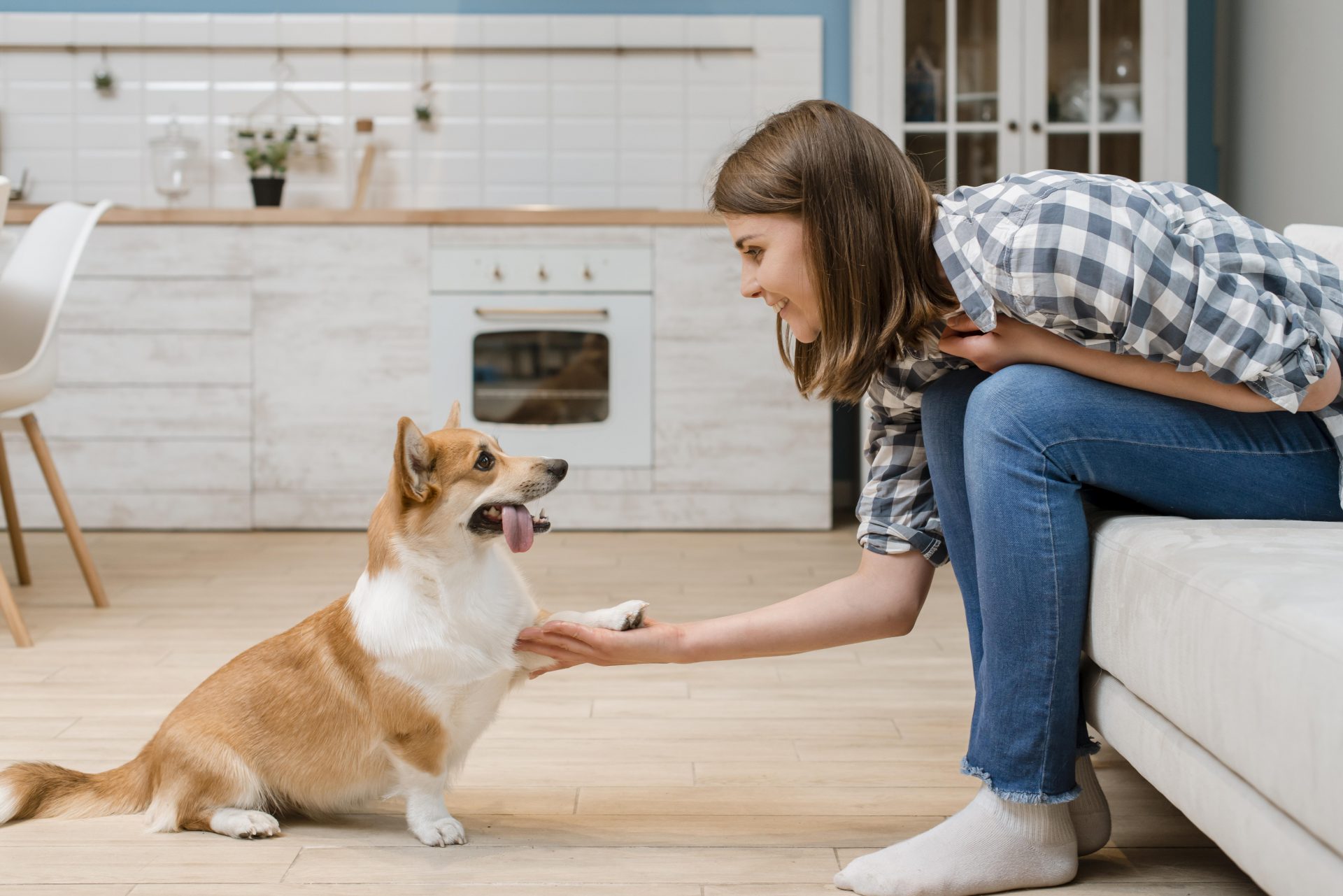
Place the closed hand of the delicacy in front of the dog's paws and wait for it to move. When he raises his paw, even slightly off the ground, immediately praise him verbally ("good dog" or "yes") and open your hand to give him a treat. If your pet does not move its paws, encourage him to sit down and place your hand in front of his paws again and wait for the movement. When the dog moves its paw - praise it and reward it. As the dog moves its paw every time you extend your hand with a treat, complete this part of the exercise.
If using the training clicker, click when the dog lifts its paw or shifts the weight to lift it. With the other hand, grasp his paw as he picks it up. Do not rebuke the dog if it tries to grab a treat with its mouth, reward only the desired behavior (raising the paw) and ignore the others so as to teach the dog to repeat the expected behavior. If the dog is still not reaching out by itself, try to lift it up and gently move it to encourage it to do so.
Add a verbal command and open your hand
Once your pet raises its paw in response to the treat in your hand, add to this trick the verbal command you chose before starting training, such as "paw". Issue this command when the treat is in an extended, clenched hand, but before the dog lifts its paw. Immediately praise and reward your pet when he lifts his paw and touches your hand in response to a verbal command. During the following repetitions, gradually open your hand. Train in this way until the dog gives it to you on the command "paw".
Remove the treat from your hand
Once the dog has mastered the preceding steps, continue to pass the paw in response to a verbal command, without holding the treat in front of its nose. Gradually withdraw the treats over the next few training sessions. Perform the same gesture as before, and when your pet touches your empty hand with its paw, praise it and reward it with a treat.
Challenge your dog
Once your dog learns to pass the paw in a calm place, add some new aspects to the training. For example, practice learning to feed the paw in a variety of situations and places, especially those that distract him (e.g. in a park, in the presence of visitors).
Tips for learning to feed a paw
- Training should be friendly and fun for both parties.
- Be patient, don't put pressure on your four-legged friend.
- Each pet's success should be directly rewarded.
- Use short training sessions (15 minutes).
Remember that puppies learn much faster than older dogs. Usually, training is also more fun for them. Also take into account that every dog has its own learning pace.