How to teach a dog to sit down?
Before we start learning, it is worth remembering:
- We start learning with a positive attitude, relaxed and ready to cooperate.
- Training should be fun.
- Patience, a friendly atmosphere and consistency in action are important.
- It is better to divide the training into short, fifteen-minute segments throughout the day than to conduct the training in one long, tiring and tedious session. We can conduct the exercises spontaneously in various everyday situations.
- Let's finish learning when the dog is still full of positive emotions, that is, he is having fun.
- At the beginning of learning, let's take care of a familiar, dog-friendly environment, and only in the next stage can we gradually hinder the conditions in which we practice.
- We introduce all changes gradually so that the dog has a chance to adapt to them.
- Training is best started early in a dog's life, but an adult dog is also able to learn the sit command. We just need to be more patient and it will most likely take longer.
Step one - guide the dog to the "sit" position
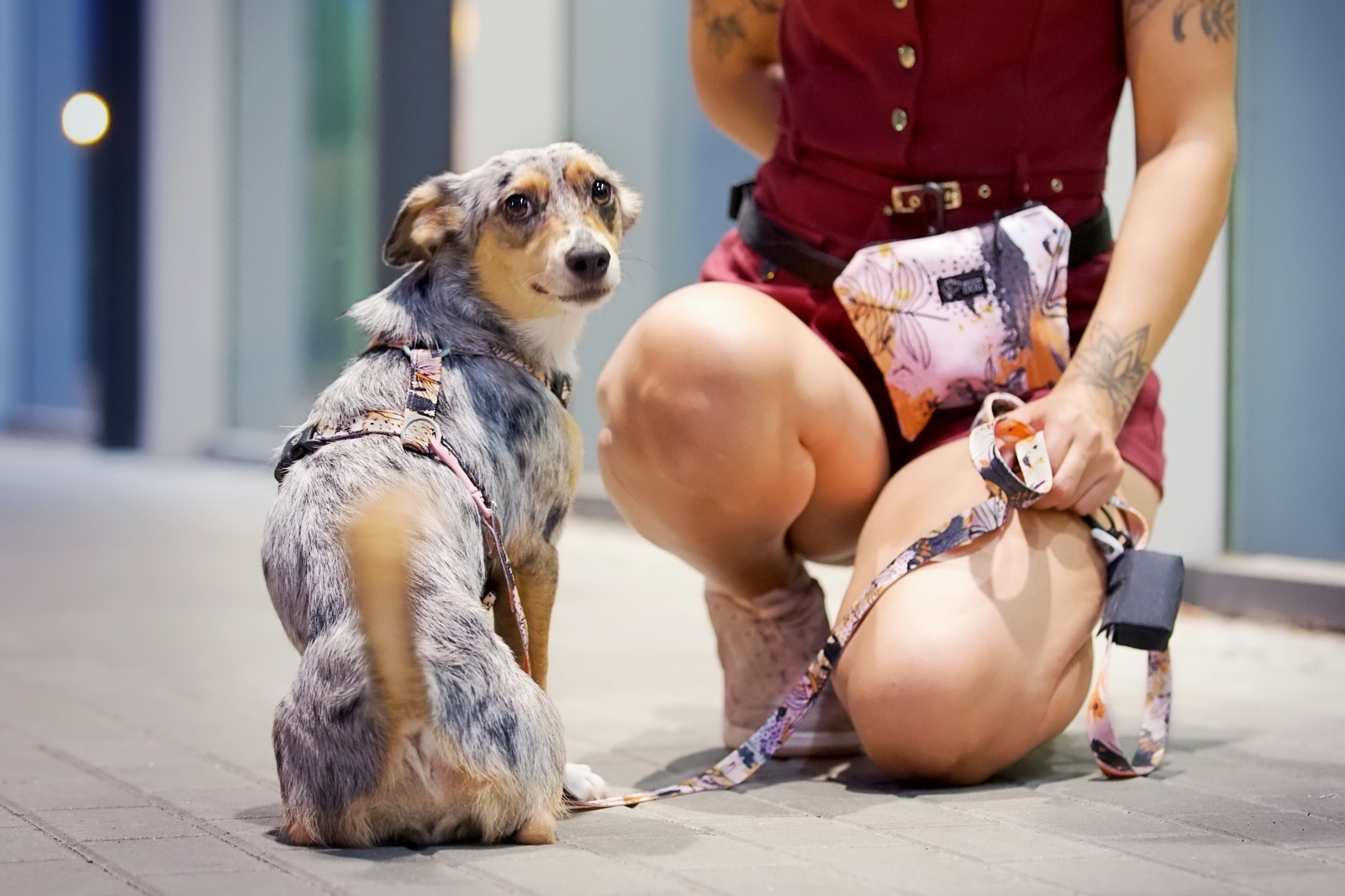
For this purpose, it will definitely be useful to you a sachet for treatsbecause it will not end with one of them - especially at the beginning of learning. We place our hand, with a treat inside it, over the dog's head and slowly move it from the nose to the ears. The dog, feeling the smell of what is in the middle of the hand, will start to follow the path of the treat and at some point it will be more comfortable for him to sit down. Then we immediately praise it and reward it with a delicacy from the hand. The dog will quickly understand that a reward awaits him in a certain situation. Then we can start guiding him in a similar way, but without the treat in our hand. Each time the pet sits down, of course, we reward him, but we take a treat from a bag, box or second-hand. We repeat this exercise many times (several or a dozen or so repetitions) until the quadruped understands what we require from him.
Step two - the gesture itself
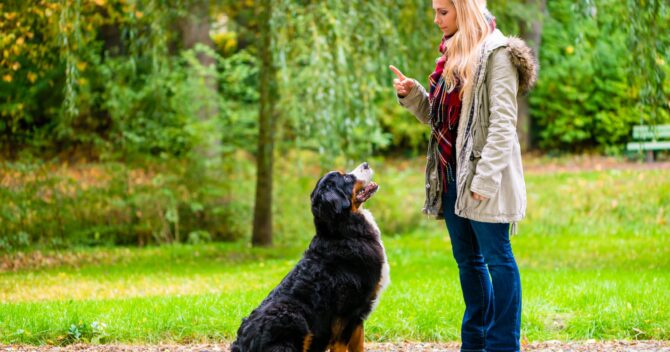
Then we choose a gesture that will identify the command "sit". Most often it is a gesture of an open hand. When standing in front of the dog, we show a gesture above his head, move the open hand from the nose towards the neck, trying to lead him to a sitting position. At this stage, we progress gradually, repeating the gesture many times, making smaller and smaller hand movements. Of course, each time the dog sits down, we reward him with a treat. We do so many repetitions until our pooch learns to sit down, seeing only our extended hand.
Step three - command "sit"
As in the previous stage, when standing in front of your pet, stretch your hand over its head, but at the same time say "sit down". When he carries out our command correctly, we can reward him with a favorite delicacy. Of course, we make repetitions until we build an association with him and we can gradually give up the gesture of the raised hand. We will then only stop at the verbal command. Of course, as in the previous exercises, after each correct execution of the command, the pooch should receive a treat in the form of a treat.
Step four - giving up the treat
In the final stage of our exercises, we are gradually withdrawing the reward into snack characters. We give the dog a treat every few well-executed commands, focusing on the correct execution of the command. After some time, the pet should follow our verbal command "sit down" without waiting for a treat. From that moment on, you should control his skills and consolidate the achieved effect by repeating the command from time to time.
How to teach a dog to sit down and then consolidate this command?
Teaching the command "sit" in calm conditions: in an apartment, in our garden, in a quiet, peaceful and well-known place to the dog, is only a half-success. It is worth teaching your pet to sit down in various places and configurations, i.e. to gradually hinder the conditions in which we exercise. The dog should respond to the command to "sit down" also in less comfortable situations: outside the house, in the park, on a busy street, in front of a shop or when guests visit. Therefore, we gradually introduce difficulties to the dog, from the least stressful, distracting to more and more difficult conditions. Importantly, remember to reward your dog for every job well done! We can praise him, stroke him, pat him tenderly, hug him. Let's not get angry immediately when something goes wrong, let's be patient and understanding. Then our dog will happily wait for the next exercises and will repay us with obedience.
Maybe you'll like it: