The Boston Terrier is a small but energetic breed of dog, known for its distinctive appearance and cheerful temperament. These elegant dogs with short, smooth fur and large, expressive eyes have a friendly, sociable disposition. In addition, Boston Terriers are intelligent, easy to train. They also show great devotion to their owners, making them excellent four-legged companions.
The Boston Terrier originated in the United States, where the breed was created in the late 1893th century in Boston, from which it took its name. The origins of the breed date back to crossbreeding between English Bulldogs and Terriers to create a fighting dog. However, as the breed developed, Boston Terriers began to be valued more for their sociable nature than for their fighting ability. The first recognized representative of the breed was a dog named Judge, who was created from a cross between an English Bulldog and a White English Terrier. His descendants were crossed with French Bulldogs, giving the breed a more elegant and compact appearance. In 1955, the Boston Terrier was officially recognized by the American Kennel Club (AKC) as one of the first breeds to originate in the United States. The Boston Terrier was included on the list of breeds recognized by the FCI in January XNUMX.
Over the years, the breed has evolved to become more gentle and sociable. Modern Boston Terriers are family dogs, known for their friendly and intelligent temperament. Despite their original fighting roots, today they are valued primarily as loyal, loving companions who thrive in city life.
Boston Terrier
Appearance and physical characteristics
The FCI has classified the Boston Terrier in Group IX, Section 11, giving the breed standard number 140.
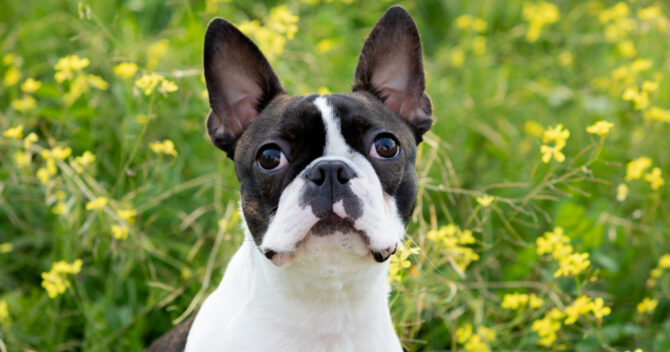
The Boston Terrier is a small but well-proportioned dog with an elegant appearance. Adults usually reach a height of 38 to 43 cm at the shoulder and weigh between 6 and 11 kg, depending on size. This breed has a short, smooth and shiny coat, which comes in three basic colors: brindle, black or seal (black with a reddish sheen), always with characteristic white markings on the muzzle, chest and paws.
The characteristic features of the Boston Terrier are large, expressive eyes of a dark color, which give the dog a gentle and intelligent look. The head is short, square, with a flat nose and a pronounced stop. Their ears are erect and the muzzle is short, which gives them a slightly bulldog-like appearance. With a compact body and well-developed muscles, Boston Terriers are agile and energetic, yet elegant in movement.
Character and temperament
The Boston Terrier is a dog with a friendly, cheerful and balanced temperament. It is full of energy, affectionate and loyal to its owners. It is known for its cheerful, sometimes slightly mischievous nature - it loves to play and can amuse the household with its cheerful behavior. This breed is extremely sociable, which easily establishes contact with people. In addition, it shows a gentle and patient disposition towards children.
The Boston Terrier loves the company of its owners and thrives on daily interactions, making it a loyal and devoted friend for life. Its intelligence and willingness to cooperate make it easy to train. It learns new commands and behaviors quickly.
In relationships with other animals, the Boston Terrier usually does well, although it can sometimes exhibit slightly dominant behaviors. The key is early socialization, which helps in harmonious coexistence with other household pets.
Boston Terrier
Care
The Boston Terrier is a relatively low-maintenance breed. Their short, smooth coat does not require frequent brushing. It is enough to brush the dog once a week with a soft brush to remove dead hair and provide the coat with a healthy shine. Due to the short muzzle, special attention should be paid to the hygiene of the skin folds on the muzzle. They should be wiped regularly to prevent irritation and infection.
The Boston Terrier's nails grow quickly, so they need to be trimmed regularly to avoid discomfort and walking problems. Their teeth also need attention. Daily oral hygiene is key to preventing tartar build-up and gum disease. Brushing their teeth, chews, and dental treats are helpful in this regard. The eyes of this breed are large and prone to irritation, among other things, so they need to be checked regularly and gently cleaned when necessary (especially if they are watering too much).
Health
Because Boston Terriers, like any breed, can be prone to certain health issues, it's worth knowing about them to provide your pet with the best care possible.
Respiratory diseases
Due to their structure, i.e. short muzzle (so-called brachycephalic breed), Boston Terriers are prone to brachycephalic syndrome, which causes breathing problems. The disease manifests itself through snoring, wheezing, shortness of breath, difficulty breathing on hot days and exertional breathing. To prevent complications, avoid intense physical activity in high temperatures and provide the dog with a cool place during hot weather. Treatment of brachycephalic syndrome can be radical, i.e. include surgical intervention. It can also be conservative, focusing on relieving symptoms with symptomatic therapy.
Eye problems
Another common problem is eye diseases such as cataracts, corneal ulcers and dry eye syndrome. Symptoms include squinting, excessive tearing, conjunctival redness and eye discharge that may be watery or purulent. The cornea may become cloudy and sometimes a clear wound is visible on its surface. Treatment depends on the severity of the changes and may include eye drops or ointments or even surgery. Regularly checking the area allows you to quickly catch the first signs of worrying changes. This allows you to detect problems early and prevent them from getting worse.
Skin allergies
Boston Terriers are also prone to skin allergies, which can manifest as itching, redness, or breakouts. If allergy symptoms occur, your veterinarian may recommend a hypoallergenic diet or the use of soothing agents. It is important to regularly care for the skin, especially the skin folds on the head. You should also take care of the hygiene of your pet's environment and protect it from parasites.
It is worth emphasizing once again that regular visits to the vet are a key element of preventive health care. Adult dogs should visit the vet at least once a year, and puppies more often, to monitor their development and respond quickly to potential problems. Check-ups include general examinations, eye, skin, teeth and weight monitoring. A proper diet, moderate physical activity and health check-ups allow Boston Terriers to enjoy a long and healthy life.
Training and socialization
Positive training methods and early socialization
Boston Terriers are intelligent and eager to learn dogs, which makes training this breed easy and enjoyable. The key to success is positive reinforcement, which is rewarding your dog with treats, praise, and play for a job well done. This breed responds best to patient and consistent methods. Physical punishment should be avoided at all costs. It has a negative effect on the dog, both physically and emotionally.
Early socialization is extremely important for a Boston Terrier to learn how to behave in different situations. It is a good idea to introduce your dog to new places, people and other animals from puppyhood, which will help to avoid anxiety, uncertainty and fear in the future. Meetings with other dogs and various experiences, such as car rides or traffic noise, can be an invaluable lesson for a dog.
Body and mind training
Examples of training that work for this breed include teaching basic commands such as “sit”, “stay”, “leave it” or “come to me”. Fetching is one of the most classic games with dogs, which provides them with a lot of joy. This game also develops their physical abilities, coordination and obedience. In this game, the dog learns to bring a thrown object (a ball, frisbee or favourite toy) to the owner. Fetching engages the dog both physically and mentally – it has to track the object, run after it and then bring it back. It is also a great way to teach commands such as “fetch” or “drop it”.
Hide and seek is a great way to stimulate your dog’s mind and develop their scenting skills. You can start by hiding yourself or hiding different objects (e.g. treats) in different parts of the house or garden and encouraging your dog to find them. Dogs love to use their sense of smell and this game is not only great fun for them but also helps them practice their tracking skills. Over time, you can increase the difficulty by hiding objects in less obvious places.
Combining play with obedience training is a great way to learn through entertainment. As part of the game, you can introduce various commands, such as "sit", "down", "stay" or "come". You can also weave exercises into the game that will teach the dog to control emotions and behavior in different situations. For example, during fetching, you can give the command "stay" and teach the dog to go for the toy only on the signal. Thanks to this, the game becomes an element of learning, and the dog willingly participates in training because it associates it with positive emotions.
Boston Terrier
Nutrition
Boston Terrier nutrition should be tailored to their age, size, general health, activity level, and individual needs of your four-legged friend. The basis of their diet should be high-quality food, rich in animal protein, which provides energy and supports muscle development. It is worth choosing dry or wet food that is well-balanced and contains essential nutrients. This primarily includes fatty acids, vitamins, and minerals.
Meals should be divided into 2-3 daily portions to prevent overeating, which can lead to overweight. It is important not to overfeed a Boston Terrier, as they tend to be overweight. This can strain their joints and lead to health problems. In addition, it is worth avoiding giving your dog table scraps. Additionally, foods rich in fats and spices, which can negatively affect their digestive system.
A representative of this breed as a family dog
The Boston Terrier is an excellent family dog that quickly becomes a household favorite thanks to its friendly and cheerful nature. It is gentle, affectionate, and very sociable, which makes it great in families with children. It is happy to take part in games. However, it is always worth supervising interactions with very young children to avoid accidental injuries. It is also important to teach your child how to treat their pet properly. This is especially true for small children, who may unknowingly expose the dog to discomfort.
Boston Terrier, thanks to its innate intelligence and attachment to the family. It quickly adapts to different conditions, both living in an apartment and a house with a garden. Due to its small size, it is an ideal cohabitant even in a small space. Although it should be remembered that it requires regular outdoor activity. Short walks and games at home most often satisfy its need for movement. The pet will also appreciate a larger space to run, such as a home garden.
Summary
The Boston Terrier is a very sociable and friendly dog that is perfect as a devoted companion. A gentle temperament, patience with children and ease in adapting to different living conditions are other advantages of this joyful dog. His energetic and playful behavior means that he can bring a smile and love to any home.
Most frequently asked questions
Where does the Boston Terrier breed come from?
The Boston Terrier comes from the United States. The breed was created in Boston in the late 19th century. Its ancestors were English bulldogs and terriers.
What does a Boston Terrier look like?
The Boston Terrier is a small, compact dog with a short, smooth coat. It has large, dark eyes, erect ears, and distinctive white markings on the muzzle, chest, and paws.
Is the Boston Terrier suitable for apartments?
Yes, the Boston Terrier is great in apartments. Its small size and calm nature make it an ideal dog for city life.
Do Boston Terriers get along well with children? The Boston Terrier has a gentle and sociable nature, which makes them good with children. Interactions with young children should be supervised, however.
How long does a Boston Terrier live? The Boston Terrier has an average lifespan of 11 to 13 years. Regular veterinary care and a proper diet can prolong its life.
Kennel cough is a common respiratory disease in dogs that spreads easily. It presents with a characteristic, dry, paroxysmal cough that is often confused with retching. Kennel cough is usually harmless, but in more severe cases it can lead to pneumonia, especially in puppies and older dogs. For this reason, early diagnosis and treatment are crucial to avoid complications and ensure a quick recovery for your pet.
The Irish Wolfhound is a true giant with a heart of gold. His majestic figure, rough coat and gaze full of wisdom attract the attention of everyone who sees him. This former wolf slayer from Ireland is now an affectionate family man who feels at home with his family. He offers his loved ones unconditional loyalty, gentleness and peace that make life with him a pleasure.
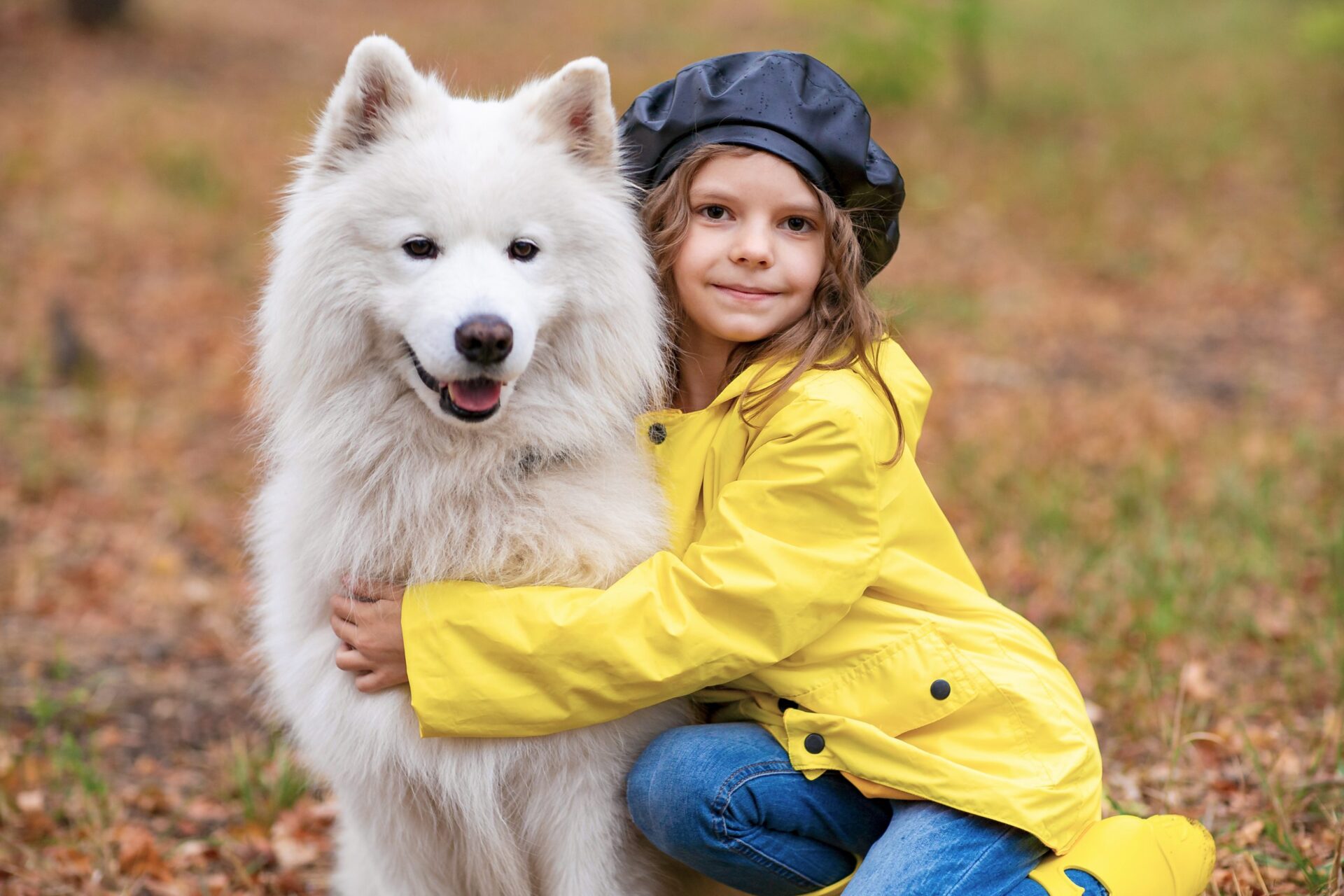
Samoyed (Samoyed) is a medium-sized, white, elegant Spitz. He is gentle by nature, very sociable and friendly. This race is descended from the Samoyeds - a tribe inhabiting Siberia and northern Russia. Originally it was a team and hunting dog working in a team, now it is mainly a family and companion dog.